report
Pocket 4: Eternal eclipse
- Which story will we tell?
Quelle histoire allons-nous raconter? The day starts anew
“#SUN - now - A girl from the front sitting on a placesgigantic orange bench. #SUN - now- bodiesA glowing sun disappearing beyond the horizon, sea and a sailing boat in shadow. #SUN - now - Lake with clear sky.” (Vidya-Kelie Juganaikloo)
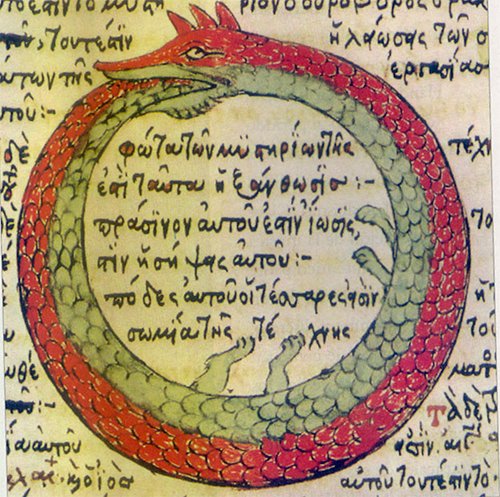
Ouroboros drawing from a late medieval Byzantine Greek alchemical manuscript (1478), public domain accessed Wikimedia Commons
The moon orbits all day, hiding in the sunshine, offering
“une tentative de réconciliation entre placesl’Ailleurs et l’Ici, perceptionsd’embrasser les deux ensembles, avec bodiesdes corps et des êtres multiples.” (Annick Bureaud Annick Bureaud, Quelle Planète (2025). )
Stretching into placesunknown galaxies, we return home.
“It matters wherehow bodiesouroboros swallows its tail, again” (Donna Haraway Donna Haraway, Staying With the Trouble: Making Kin in the Chtulucene, 2016, Durham: Duke University Press. )
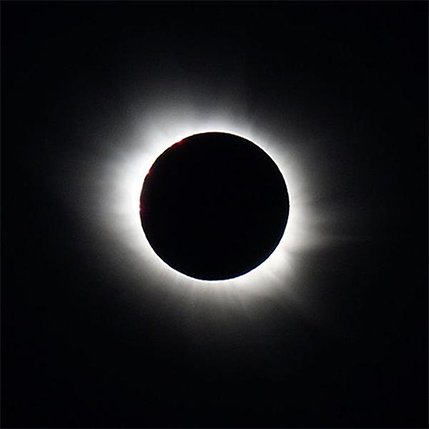
Damien Deltenre, *Total solar eclipse of March 20, 20158. Creative Commons, Wikimedia Commons
- There is no beginning, as the loop unfolds.
-
Reading material
- Donna Haraway, Staying With the Trouble: Making Kin in the Chtulucene, 2016, Durham: Duke University Press.
- Annick Bureaud, Quelle Planète (2025).
- Assmann, Aleida. “Ouroboros. The Circle as a Concept of Infinity.” Aegyptiaca. Journal of the History of Reception of Ancient Egypt 4 (2019): 6-18.
- St John, G., 2014. “Total solar eclipse festivals, cosmic pilgrims and planetary culture”. In Pop Pagans (pp. 126-144). Routledge.