chapter
Democracy and its legacies
Can and should democracy be revitalized? Who can and will be involved with such a project?
European democracies are often presented as the antidote against exclusionary politics. Yet these democracies are built on/with/through legacies of colonialism, fascism, and capitalism (amongst others).
Photos: © Michelle Geerardyn
Illustrations: © Valentine Zhang (https://www.instagram.com/valentinezhang/)
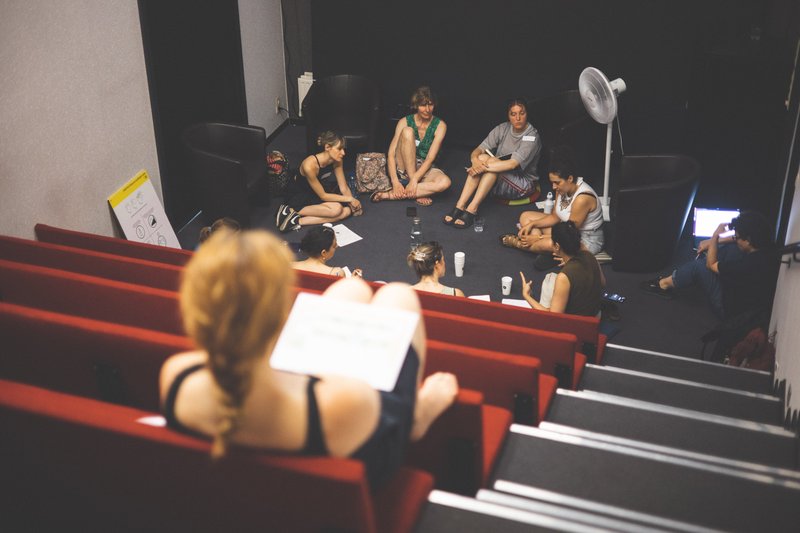
This workshop was based on an open group discussion about democracy, equality and anti-gender movements. Participants came from different backgrounds, including NGOs, research, public institutions and community organisations. Everyone shared their own experiences and perspectives.
One of the main ideas discussed was that anti-gender movements are not completely new. Several participants explained that these movements are connected to older systems such as patriarchy, colonialism and social inequalities. They believed that these existing structures make it easier for anti-gender ideas to spread today.
Another important topic was the meaning of democracy. Many participants said that democracy should not only be about elections, but also about equal access to rights and opportunities. They discussed the difference between having rights on paper and being able to use them in real life. Several examples were mentioned, including migration, women’s rights and LGBTQ+ rights.
The group also talked about the importance of language. It was interesting to hear how words used by politicians and the media can influence the way people understand social issues and political decisions. I had not really thought about the impact of language in this way before, and I found this part of the discussion very interesting.
One point that particularly caught my attention was the discussion about knowledge. Several participants said that a lot of valuable research stays inside universities and does not always reach the general public. They highlighted the importance of translating academic knowledge into simple language so that more people can understand complex topics and participate in democratic discussions. This was probably the idea that stayed with me the most.
The discussion also focused on participation and critical thinking. Many participants agreed that democracy depends not only on institutions but also on informed and active citizens. They believed that encouraging people to participate more and helping them better understand these issues could strengthen democracy.
Personally, I appreciated that the workshop was based on dialogue rather than formal presentations. People came from different professional backgrounds and shared concrete examples from their own work, which made the discussion more engaging and practical.
Overall, the atmosphere was respectful and open. Even when participants had slightly different opinions, they listened to each other and tried to build on each other’s ideas. The workshop focused more on exchanging experiences and reflections than on finding one final answer.
The three key words chosen by the group at the end of the session were (RE) Connecting, Partycipation, and Translating, as they best reflected the overall discussion.