chapter
In the belly of the meme
Tactical dissemination in the Arab and diasporic digital sphere
Noura Tafeche and Basem Kharma
Increasingly, meme scholarship has expanded beyond the familiar terrains of Pepe/MAGA/Wojak-centered analyses, tracing memetic production across heterogeneous linguistic, aesthetic, and political environments. What this broader cartography still tends to miss, however, is the tactical dimension of meme-making—how visual fragments become instruments of maneuvering within constrained or surveilled publics.
In this article, we treat memes not as interchangeable units of digital culture but as mutant visual operations: unstable, adaptive, and deeply entangled with the shifting conditions of the Arab world, its diasporas and its fierce stance.
Studying the Arab online sphere is crucial, as research on memes belonging to this region of origin remains quite limited. Memes within this context carry loaded meanings shaped by obviously specific historical, cultural, and political contexts, including legacies of satire rooted in pioneering figures like Naji al-Ali, whose work critiqued authority through a highly symbolic and irreplaceable character, Handala (Fig 1).1
Handala is a ten-year-old Palestinian refugee – the same age al-Ali was when he was forced into exile – who symbolizes steadfast defiance and the refusal to grow up or turn his back until he can return to his homeland, Palestine. Born in the 1970s, this iconic and deeply beloved figure has become a ubiquitous emblem of the Palestinian struggle and wider Arab resistance, appearing across an infinite variety of media.
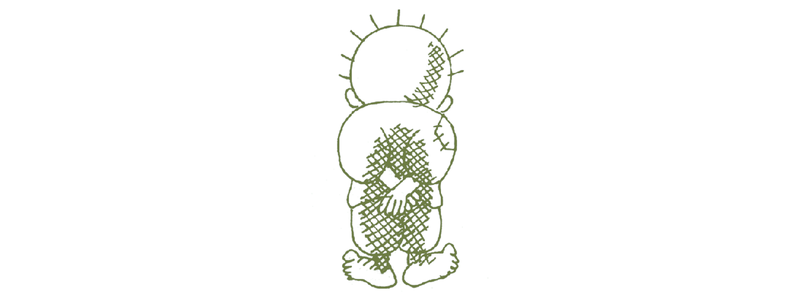
Fig 1: Our beloved Handala <3
Owing to its extensive propagation and dense semiotic charge, Handala may be considered a full-fledged precursor to digital virality in the Arab world.
Academic studies often rush to identify the foundational cultural markers of a movement, in this case it is not difficult to trace back Handala’s visual legacy and energetic dissemination belonging to a long tradition of political satire. Far from diminishing over time, its enduring symbolic relevance continues to shape and reflect political and cultural expression.
In this sense, contemporary memes inherit not only Handala’s political edge but also his tactical function: the ability to bypass official narratives through accessible, rapidly circulating visual forms.
Nowadays, in many Arab countries, public spaces for open discussion are shrinking due to authoritarian repression and strict control over speech. Within this context, memes function as a subverting tool to circumvent censorship, make political dissent louder and produce alternative worldviews. They do not simply represent a ‘space for dialogue’ but act as pocket instruments within contested digital spaces, serving as both mediums of communication and subjects of research that reveal imbalances between surveillance and resistance.
In this regard, 2011 stands as a pivotal period. The Arab revolutions that erupted that year brought with them an ideal of societal change and reorganization in a more democratic and horizontal manner. Meaning, collective decision-making, grassroots participation, and the rejection of centralized, authoritarian systems through the masses’ self‑organizing power to overturn entrenched orders.
Public squares from the very Sidi Bouzid, the Tunisian town where Mohamed Bouazizi’s self-immolation in December 2010 ignited the first wave of the Arab uprisings, to Tunis and from Maydān al-Taḥrīr in Cairo to the streets of Damascus, Aleppo, Sana’a, Benghazi and beyond, became spaces of mass mobilization. In these squares people called for political freedom, social justice, the eradication of poverty and the dismantling of hierarchical power structures and corrupted governments. During this period, crowded in-person debates were abundant, and the exchange of opinions was immediate and no longer needed to be mediated or hidden behind the interpretative layers of satire. However, with the general repression of revolutions and the return of regimes in 2014, public gathering for expression became dangerous—if not impossible. The need to recreate the spaces once occupied by the squares became essential in order to keep the ideals that had filled them alive. In response, memes and other experimental forms of visual hypertext, slightly predating today’s memetic formats, emerged in the early 2010s. Functioning as a tactical digital tool, reviving lost spaces of expression and sustaining revolutionary ideals in new, adaptive formats, encapsulating hopes and their subsequent disillusionment following the 2011 revolutions and articulating the rapid decline in the popularity of political leaders. This dynamic has long been visible in images circulating on Facebook and in the handwritten signs carried by demonstrators calling for the resignation of then–president Hosni Mubarak in Egypt (Fig 1, 2, 3).2
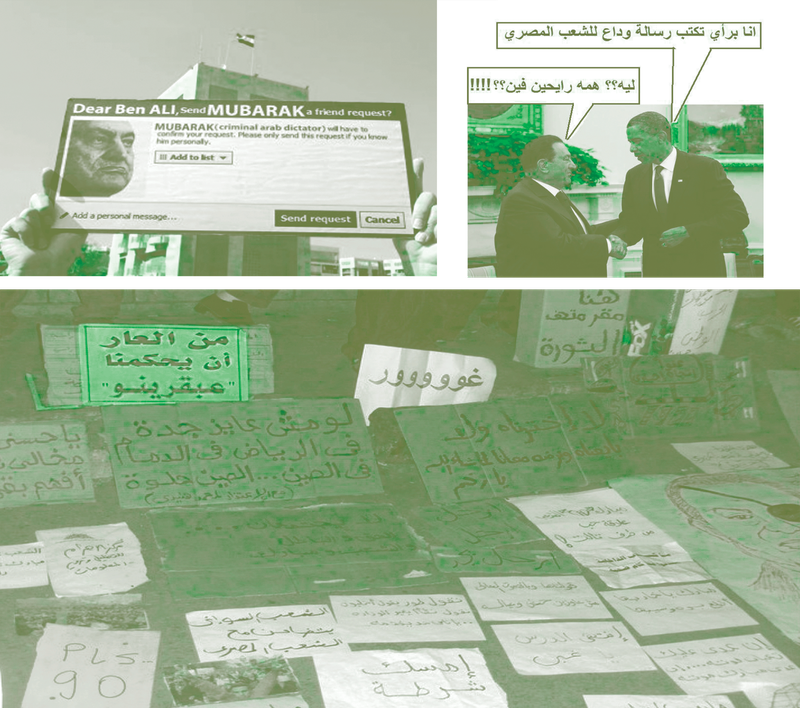
Fig 2 (Top Left): Source: Photographer not credited.
Fig 3 (Top Right): Source: Author not credited. Translation from Arabic: Obama advises Mubarak to write a farewell letter to his nation (before stepping down during the 2011 Egyptian revolution). and Mubarak asks: ‘Why? Where are they going?’
Fig 4 (Bottom): Source: Photographer not credited. Translation from Arabic: A pile of cardboard signs, one of which referring to Mubarak leaving: ‘If you don’t want to go to Jeddah, there is Riyadh and Dammam or even China, China is beautiful.’
The consequences and tensions born from those uprisings continue to traumatize political and cultural life across the region. Memes offered then, and at present times, an irreverent, humorous, undiluted – sometimes therapeutic, sometimes unsettling yet frank – lens to observe these ongoing processes, showing how self-organized digital spaces remain a beacon of tactical contestation.3
Let’s be clear: not every single meme is tactical. Memes become tactical to the extent that memers strategically craft and disseminate content to influence. They engage intentionally niche or broader public opinions, spur dialogue – sometimes even disputes – and navigate repressive environments where open expression is restricted, not only by governments but also by the platforms themselves. Within this ecosystem, private groups flourished on Facebook, providing semi‑closed spaces for experimentation, exchange, and the cultivation of shared references.
Already in 2017, the now‑archived, original content only, private Facebook group Post Colonial Memes for Oriental Minded Teens,4 still active private group Abnormal Arab Shitposting,5 and still active page Arab memes for depressed teenagers6 stood among a constellation of bilingual, possibly diasporic-led, online spaces with participation in both English and Arabic, that together sketch what could be seen as a minimal archaeology of Arab and diasporic anti/post‑colonial meme culture.
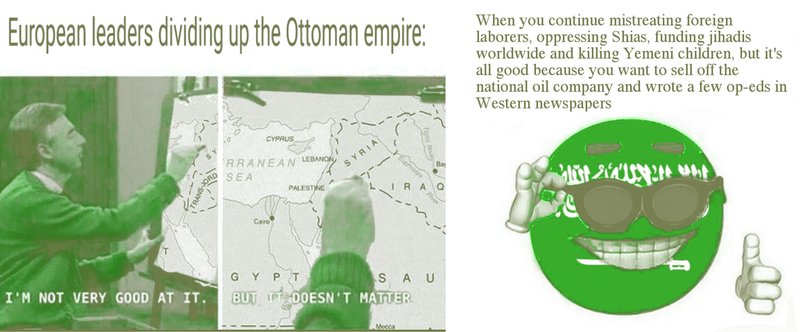
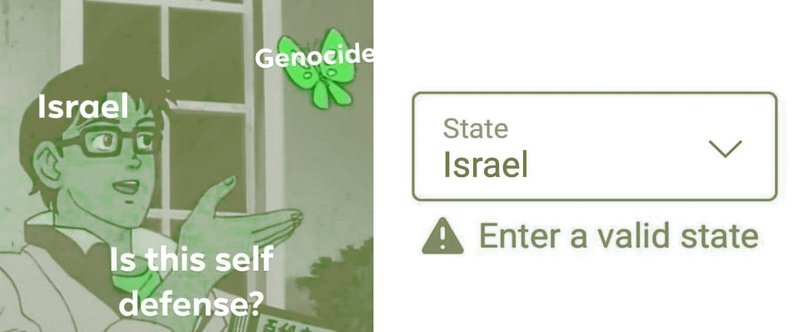
Fig 5, 6, 7, 8: Memes from Post Colonial Memes for Oriental Minded Teens. Respectively 22 April 2019, 6 January 2019, 1 June 2018 and 28 August 2019.
In their own irreverent way, these Facebook groups functioned as gateways into Arab and Muslim histories and – at times – as bridges to a community from which one might otherwise feel fragmented or apart. This is not the place to determine whether the meme is a form of pure or purist activism, but it’s also worthy to analyze how memes operate within fast-moving digital ecosystems, favor adaptation and encapsulate highly-dense semiosis designed to trigger rapid response, which are key tactics in digital resistance.
Taken together, these earlier formations—Handala’s visual legacy, the post-2011 tactical use of images, and the semi-closed meme ecologies of the late 2010s, outline the genealogy from which today’s Arab meme-makers emerge. Yet this historical arc tells only part of the story.
From the source: the memers POV
In contrast to our previous work7 which provided our external interpretive framing for Arabophones and Arab culture/politics/life-related memes, we chose to take advantage of something that online culture sometimes allows: the ability to reach out directly to the creators themselves. Through a series of interviews with two meme pages we are fans of—ones we, Noura and Basem, frequently share and discuss in our private conversations, we aim to understand how their work is tactically framed within the Arab meme ecosystem. Especially in relation to current events and lived realities across the Arab diasporas. Our goal is to inspire and highlight the agency involved in meme-making as a form of tactical media, with flying colors.
The interviews were conducted via anonymous email exchanges. We neither asked for nor received identifying information beyond what the memers were comfortable sharing. This approach allowed for open, thoughtful responses while respecting their anonymity—a political and personal necessity in their trade.
We now invite you to hear from the creators themselves: Melanchonyasylum8 and Arabiamemetica.9 Melancholyasylum has been active on Instagram since mid-2022, but the creator used to post Syrian political memes on a closed Facebook group a few months before opening an Instagram page. The creator has been living in Germany for about 8 years.
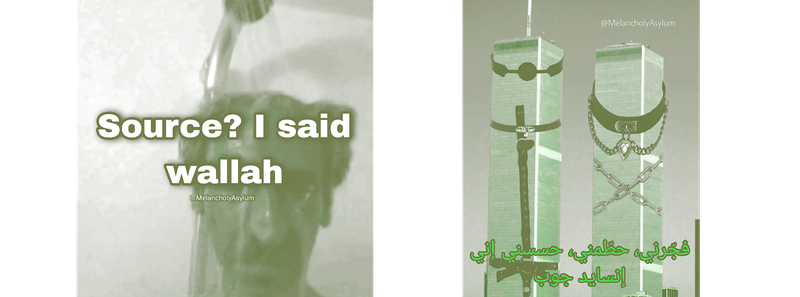
Fig 9: @melancholyasylum, Instagram. In Arabic ‘wallah’ means ‘I swear by God’. In modern casual speech – especially among youth – it’s often just used for emphasis to affirm sincerity.10
Fig 10: @melancholyasylum, Instagram. Translation from Arabic: ‘Blow me up, wreck me, make me feel like it’s an inside job’.11
Arabiamemetica is a meme page created in October 2024. Unlike other memers, the administrators of Arabiamemetica use Italian alongside Arabic to create their memes. The themes vary widely and focus both on ideas emerging from the Arab world, particularly resistance against Zionism, and on local events happening within the social/militant context in Italy.
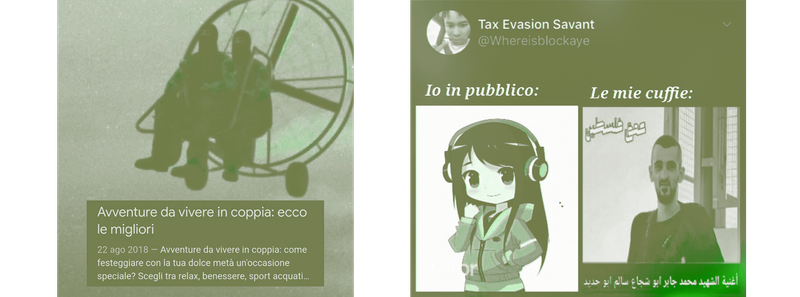
Fig 11: @arabiamemetica, Instagram. Translation from Italian: ‘Couples’ adventures: here are the best ones’. 12
Fig 12: @arabiamemetica, Instagram. Translation from Italian: ‘Me in Public – My headphones’. The headphones image depicts the song dedicated to Martyr Muhammad Jaber ‘Abu Shuja’a’ (1998-2024), commander of the Tulkarem Battalion.13
Tracing their trajectory and development is useful for understanding how these pages emerge and evolve over time.
Melancholyasylum has been active for several years, Arabiamemetica, by contrast, was recently launched (in October 2024), they both use bilingual play, the first between English and Arabic allowing its memes to circulate widely, while Arabiamemetica’s choice is to work mostly in Italian, occasionally dipping into Arabic, anchoring its work in the Italian cultural space, a setting where the debate has been lacking and sorely needed.
Despite these differences in trajectory, language, and scale, Melancholyasylum and Arabiamemetica share a common tactical horizon. Both use memes to carve out semi-closed communities of recognition—spaces where Arab and Arab-diasporic audiences can see their own contradictions, doubts, and hopes mirrored back at them, converting platforms like Instagram into semi-public arenas where anger, grief, and satire can coexist. Their memes operate as pressure valves and as tools for memory work: they digest the aftermath of 2011, the violence of ‘Western values’, and the ongoing genocide in Palestine. They use humor and DIY dense visual formats to process trauma and push back against dominant narratives. What unites them is not a shared aesthetic but a shared insistence that meme-making can be a form of situated, vernacular theory and a means of collective survival in hostile environments.
@melancholyasylum
What do you think the function of memes is in the absence of spaces for discussion in the Arab world, both in the diaspora and in Arab countries?
I think memes are a language Arabs use to get a point across. And for me personally it’s a megaphone because I never felt like my voice would be heard if I was serious, but if I could somehow get people’s attention with humor, I could perhaps get them to listen to me. Memes have also been a means of escapism. If I make a meme about something terrible happening to us, maybe it’ll help you digest the situation (despite a lot of my memes being generally cynical). On top of that I wasn’t impressed by Arab memes at all and felt like we needed better representation.
Expanding the perspective to include other pages similar to yours, such as @panarabistmeme14 – or those more focused on archiving a zeitgeist, like @onewiththeinternet15 – do you observe an aesthetic, linguistic, or political evolution in how the Arab community is representing itself through memes or other DIY online languages?
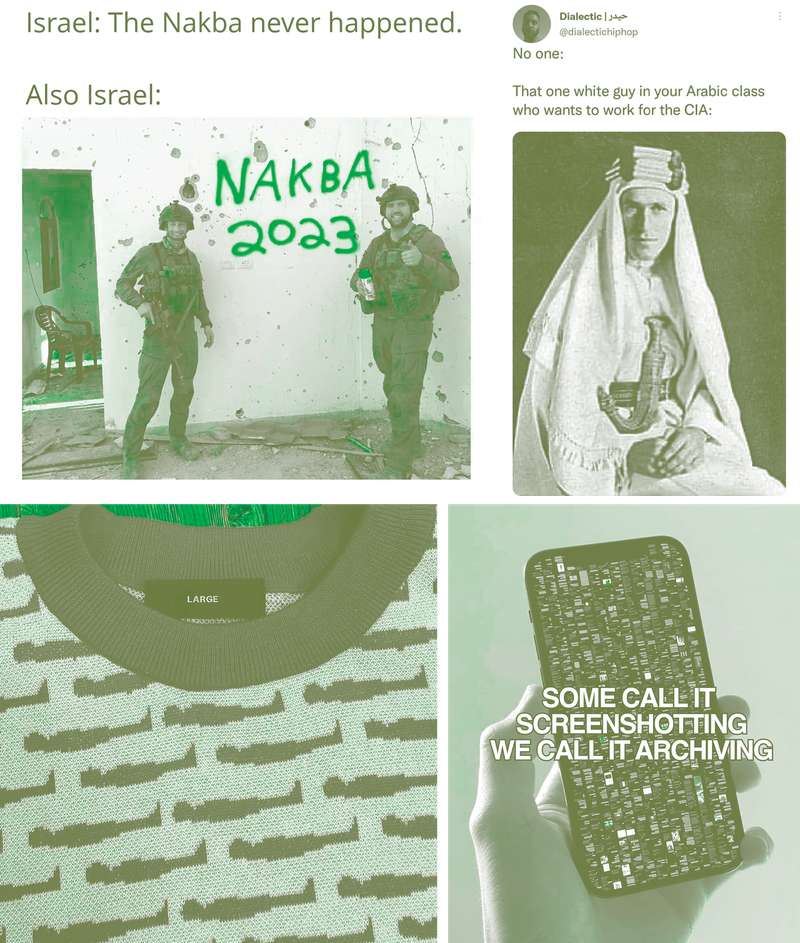
Fig 13, 14 (Top): @panarabistmemes, Instagram.
Fig 15, 16 (Bottom): @onewiththeinternet, Instagram.
Yes, of course. A lot of the new Arab pages popping up on my radar are strange and obscure, unlike the meme pages we used to see 9-10 years ago. Take the account levantinediva.16 For instance, that’s making amazing political and social Arab memes from a feminine perspective right now. I have huge respect for those creators and believe they fill a very important need. Sometimes I don’t understand the memes, or they don’t make me laugh but I’m intrigued that somebody would make a meme about a certain subject or in a certain way that I would’ve never thought of doing. But in many cases unfortunately these pages don’t last long. Either they get terminated and don’t make a second account or they lose their passion. I think there’s a certain love for attention that you should have in order to have a long-lasting meme page.
Your page and some of the memes you create express pain over the situation in Syria through a sarcastic lens that spared no one. In this way, it seemed to echo the revolutionary ideals of 2011, at a time when Syria had become a battleground for various foreign actors and appeared unable to determine its own destiny. What do you think was the function of memes in such a present context?
I get so many messages asking me who I’m with. Am I on this side or the other and even though this question might make sense in the real world, in the meme world it doesn’t. If I find humor in something, I make memes about it no matter what. Sometimes I make a meme but because of the timing, I wouldn’t post it until some time had passed. For instance, there was some hate online towards Druze because of what Al Hajri of Sweida was saying17 and at the same time I thought of a meme about Druze (Fig 17).18
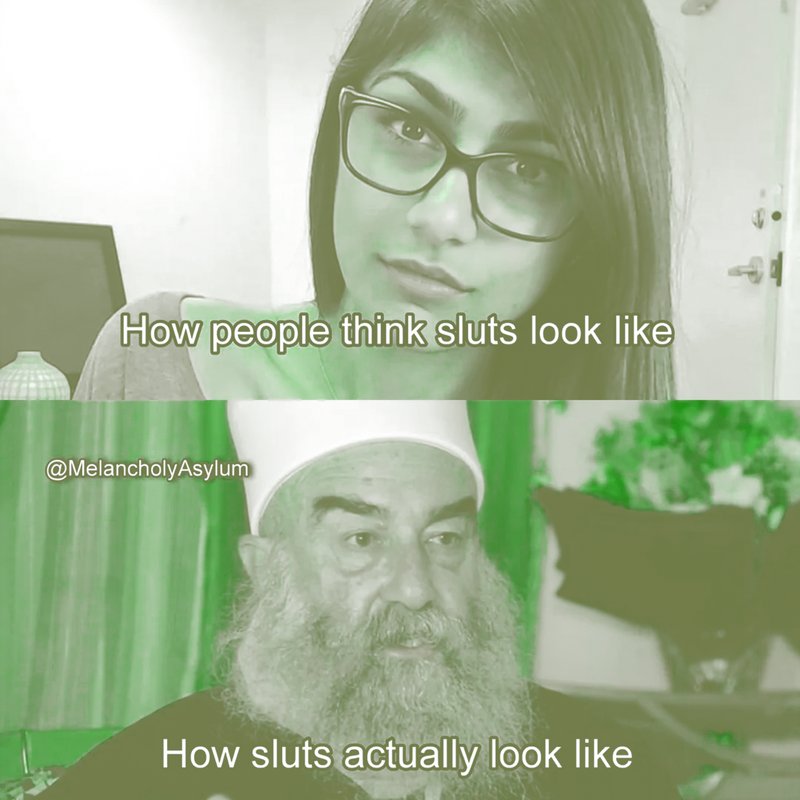
Fig 17: @melancholyasylum, Instagram.
I made the meme and waited till the dust settled a bit and then posted it. I didn’t want to implicate Druze as a whole in what one of them was saying and the meme wasn’t even about politics, but still, I didn’t want them to get undeserved hate so I waited a bit. I don’t do this all the time. I’m not even always aware of it. I only got one comment on that post calling me sectarian for ‘talking about other sects,’ but aside from that, nothing else.
When it comes to measuring the impact, I don’t read the comments much anymore, there are just too many. I usually never hide or delete comments under my posts even if they’re shitting on me. Instagram automatically hides some comments, but I always unhide them.
I feel like people should know what others are saying. Recently, I had to disable comments on one of my posts illustrating the trolley problem:19 the person with their hand on the lever was marked with the Syrian flag, while the people on the tracks are marked by the Iranian and Iraqi flags. The comments got very heated and the racism between Syrians and Iraqis was unbelievable, I was tired of deleting comments so I just disabled the section. Sometimes you never know the reaction a meme will get. The meme with the vodka bottle20 started getting so much attention from around the world all of a sudden and for some reason, people started praising Bashar, so I had to post and pin two comments explaining I was going to delete comments talking shit on minorities and another one explaining to the foreigners that this meme was meant as satire and we don’t miss Bisho.21
With the fall of Bashar al-Assad’s regime (December 2024), there has been a noticeable shift in the tone and direction of memes. While satire traditionally targets those in power, your satire continues to be directed at Assad. However, with the rise of Al Sharaa, your memes have increasingly focused on the new government. What space can satire occupy in this emerging situation that is taking shape in Syria?
Believe it or not I barely got any hate from posting about Bashar before his fall. I only got it a few times when I said that Bisho isn’t part of the axis of resistance. It’s just a made-up lie. I was accused of being a terrorist and all that stuff. When it comes to the new government, I get a lot of hate online when I criticize it. I think I once said something along the lines of ‘we used to be afraid of the government when we criticize it, now we’re afraid of the people when we criticize the government.’ I understand it though, because so many people see hope in this new government and to criticize it might mean that a 13 years long revolution was for nothing. I’m not going to stop making memes about whoever steps into the spotlight, with a reason to be made into one. I still make memes about Bashar because I think we’re not done with him yet. People still blame Syrians for defeating him and say that we were good before the revolution. It’s a disservice to our image if I don’t defend the revolution.
Yeah, that makes sense, that the revolution is one of your core principles in meme making. Let’s talk about the importance of using languages other than English in social media environments. You often switch between Arabic and English: how does this choice relate to your position in the diaspora, and what impact does it have on the kind of content you create? Do you find that certain formats or topics work better in one language over the other—for instance, was the choice to use Arabic in your quiz meme (Fig 18) 22 tied to meaning, tone, or perhaps even to navigating censorship?
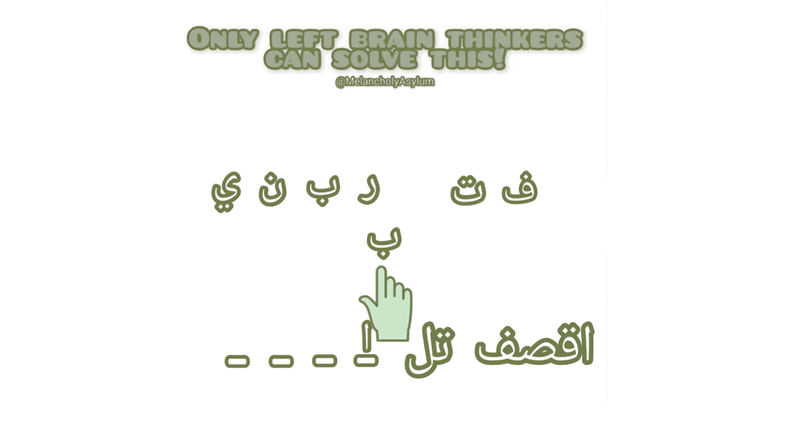
Fig 18: @melancholyasylum, Instagram. Translation from Arabic: ‘Bomb Tel …’
When we discuss that particular meme I used Arabic because the phrase ‘اقصف تل ابيب’ is originally popularized in Arabic so it wouldn’t be funny if I said ‘bomb Tel Aviv’. When it comes to censoring Instagram it doesn’t matter what language you post in, the censors will find you. I use English in my memes because most of the media I consume is in English. I can express myself in English better than Arabic to be honest. Some memes of course are funnier in one language or the other and I like to make my memes accordingly. Also, the clash of Arabic and English in memes is by itself sometimes humorous. You feel like those two languages are not supposed to be together so when you combine them it leads to something new. Like my ‘Ali El Deek is an industry plant’ meme (Fig 19).23
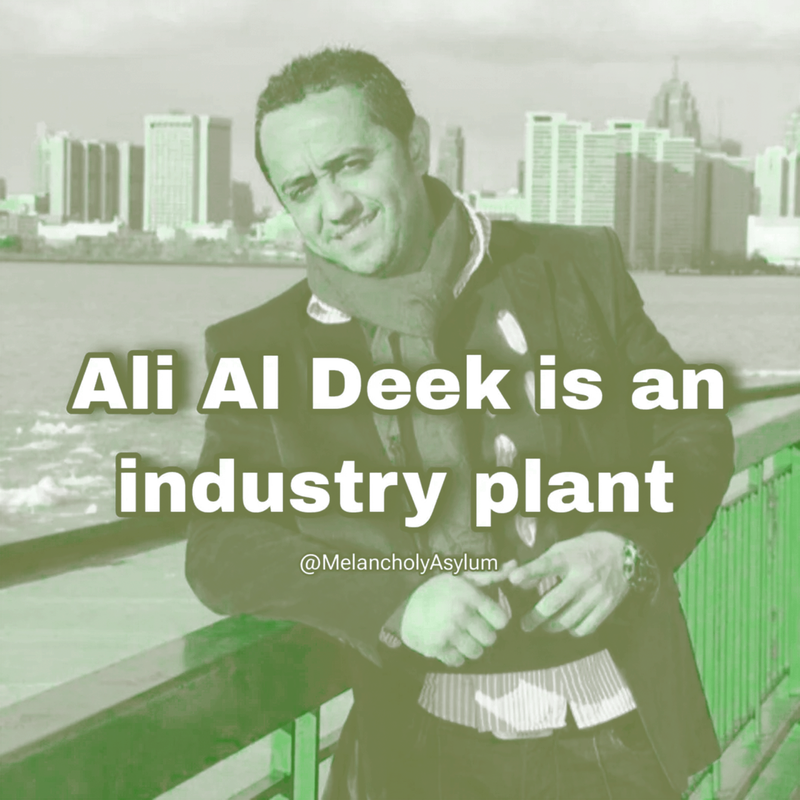
Fig 19: @melancholyasylum, Instagram. The humor arises from applying the slang term ‘industry plant’, typically used for North American and anglophone pop stars, to the unlikely context of a Syrian folk singer.
Beyond language, there is also an aesthetic dimension. Much of the English-speaking, Western-centered internet feels visually exhausted—recycling the same figures again and again, from Trump and Musk to European-philosopher quotes and even Luigi Mangione’s iconoclasm. K-pop and Japanese otaku/pop culture have become a significant aesthetic center in their own right, yet the world is far more complex than a simple two-pole model. Do you think digital culture can evolve toward a more pluricentric ecosystem, one less dominated by these Western references? Or is such speculative plurality still mostly aspirational?
Here’s why I think the Arab space online is a lot better than the Western space. We make our own memes just like they do, we have our own references just like they do, but we are AWARE of their memes and their culture and we can mix our memes with theirs, criticize them, make fun of them etc… We have more to say than they do because we’re aware of everything they talk about but they’re not aware of what we say. We can make fun of them and they will never understand it. We can reference an event that happened in the Arab world using a Western meme which is something that they can’t do. If the Internet is mostly dominated by Western culture, that doesn’t bother me—as long as we Arabs, or people living in the Arab world, have our own little online space filled with inside jokes they don’t get.
We agree! In 2013, the design duo Metahaven wrote in their pamphlet on memes called Can jokes bring down governments?: ‘The joke is an open-source weapon of the public. The meme has escaped the confines of internet forums, and is becoming a tool useful to targeted political struggles.’ Do you think their statement is still valid in 2025?
Yes, I agree completely. There’s a reason why memes are censored. They have a strong effect on how people perceive certain situations or events and it could change people’s minds one way or the other. When I first started posting memes online it was because of my frustration with the fact that I have something to say but nobody would listen. Posting them and getting a huge following has certainly changed my life and I get a lot of messages telling me ‘خلقي فشيلتي وهللا بحكيك’24 so on a small scale I’m reaching people’s hearts. I’m sure this would gradually have a ripple effect and slowly more people will see my memes and have their opinions changed or feel like their opinions are heard which would lead them to feel like they’re not alone in their struggle and they’d try to reach more people that feel the same way. And if the meme is political it would definitely have the power to shake governments.
Do you find that your meme-making spills over into your everyday political actions? Or do you see your activism as separate from the page?
I go to protests sometimes, I argue with people when they talk falsely about Syria or Palestine and I wear stuff that shows solidarity, so people on the streets either feel encouraged to do the same or so people would know that there’s opposition to their POV. Especially since I live in Germany, I like to wear my Free Palestine t-shirt to lectures where the dean of my university is the professor.
Your work is starting to be displayed and discussed on established platforms (like Do Not Research25) and in key articles on culture magazines (such as Icon26) related to digital culture, and through them, a historical and political theme is being expanded via your medium. Are you attached to the underground nature of your work, or do you appreciate the fact that your meme circulates through transmediality—meaning, not only confined to social platforms but also discussed in the art world?
I love the fact that memes are getting what they deserve. They’re art, they’re genuine art. Some are good art, some are bad, just like any form of art. And their quality isn’t about how well made they are. Most of the time it’s about how funny they are, but the well-made ones also have a special place in my heart. I’m happy that my memes are being recognized in the Arab sphere no matter which platform. I feel like I gave a voice to the people that matter to me the most. Even though my username is in magazines now, I still feel like we’re in a niche community where a lot of people know each other and the outsiders don’t know about us. We’re the niche pocket in the Arab pocket of media. The fact that my memes are being discussed also makes me self-conscious about them. I never thought I’d be written about in my life but I know that it’s something good because it’s tangible proof of my achievement in this sphere. I know I inspired a lot of meme pages, I’ve made a lot of people happy, I’ve had a big effect on Syrians in this niche pocket of the internet, but this feels like something I can just hold in my hand and look at. For a motivationless person like me, something new like this could motivate me.
Do you foresee that memers and the broader memer community will assume a socially significant role in the future within the context of Arab and Arabophone self-representation?
Yea they could, I don’t see why they couldn’t or won’t. Making memes is just another creative outlet for artists and we’ve seen many artists take important roles in government or society before.
Choose your favorite meme that you’ve created. Would you like to tell us about the choice behind it? What sparked the idea?
I’ll just tell you about one of the memes that I love so much. It’s the Courage the Cowardly Dog intro parody ‘بشار الرئيس الجبان’27 (Fig 20).28
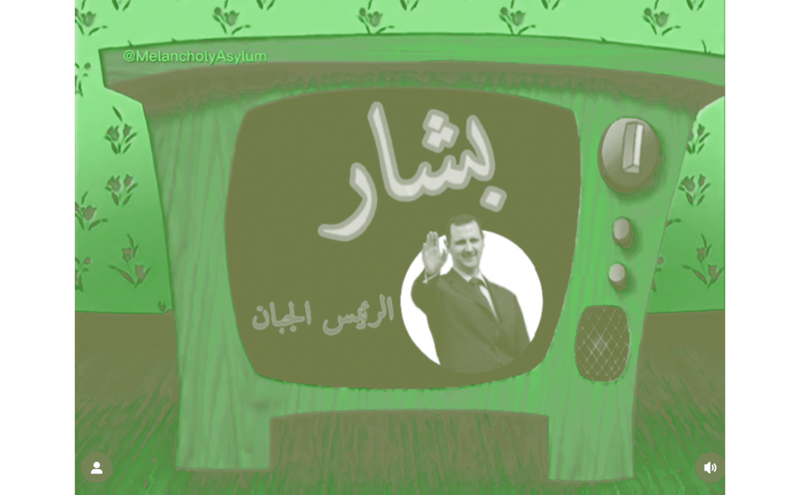
Fig 20: @melancholyasylum, Instagram. The parody plays on the idea that Bashar is a cowardly president (with a pun, since ‘Asad’ means ‘lion’ in Arabic), just like Courage is the cowardly dog.
I can’t believe I made that meme in 2022 and on my phone. I put a lot of effort into it. Maybe I’d also shout out the ‘Pimp My Country’ meme29 because it took so much out of me. Planning how to make it took months and to actually make it look the way I wanted it to look was so tiring. It’s disappointing those two memes didn’t get the attention they deserved.
People don’t realize how hard it is to find material that you can edit over when you want to make memes. I couldn’t find a pic of Bisho with his mouth open which is why I had to use my own mouth and edit it over a pic of him for the last frame of the meme. I think it didn’t get lots of attention because it was relatively early on. Before I reached more than 1k followers perhaps I’m not sure. People prefer the memes that you can understand and get the gist of in one or two frames. That’s my experience at least.
Do you create memes for yourself, or do you consider your audience when making them? What kind of audience are you most attached to?
Yes, I create a lot of memes for myself. I make memes that I never post. I made a meme where I say something along the lines of ‘if you’re struggling to get over an ex, make them a meme but never send it’. A play on writing somebody a letter but never sending it. I also make memes for my friends with years of inside jokes with the same effort I put into making memes that I post publicly, it’s very fun to see people reacting to something they never thought somebody would ever make. When it comes to what type of audience I prefer, I don’t think I have that anymore. I do consider what type of audience would like to see what meme so I make memes that every type of person would like but I don’t have favorites anymore and I try to make memes that I personally like otherwise I lose the reason I made this page in the first place. I must admit sometimes a meme would go viral but a few of my followers that I value don’t end up liking it and it makes me hate the meme. I scroll through my memes when I’m bored cuz I think they’re fun, but if the meme wasn’t liked by some of my favorite followers I scroll past it instinctively.
The memer, while maintaining anonymity, becomes part of a broader network, whether Arab, Arabophone, Arab-descendant, or otherwise. Do you perceive this sense of community? In this regard, feel free to mention any pages that inspire you or your general sources of inspiration.
Feeling like you’re part of a community comes and goes. There was a time when I felt like everyone in Arabgram knew each other, collaborating and connecting. But these days, I don’t really feel that anymore. Every now and then, a page pops up trying to create a sense of belonging or push for collaboration on some project—but I’m just over it. Nowadays, I care more about making sure my perspective is presented accurately, without having to compromise on someone else’s ideas, even if they’re well-intentioned. Maybe there’s a small niche community growing in Syriangram—I’ve heard there are a lot of new meme pages, but honestly, I wouldn’t know much about it. I wish them all the best.
I’ll take this occasion just to say that every time I see a new Arab meme page pop up I feel so proud and happy and I wanna shout them out because some of them bring something to the table that I could never bring or have the early courage to create something even though people might not like it. Here are some shoutouts: (all Instagram pages)
@levantinediva @danny_private._.hehe @reo0.exe @shitposting.dairy @syriandomari @wkm_2.0 @lookatthissy @lilithpal85311 @averagesyrian @sharabelward @5arra.posts @religion_mems
@arabiamemetica
Translated from Italian by Noura Tafeche
What inspired the creation of the @arabiamemetica page?
We30 grew up in Italy—a country that loves to see itself as the cradle of civilization, art, and hospitality. But when it comes to representing the Arab presence here, things tend to go suspiciously quiet. And when it does speak up, it’s often through the usual orientalist clichés. There were almost no spaces speaking from the diaspora, to the diaspora—with all the messiness, nuance, and contradictions that entails. So we thought: if no one else is doing it, maybe we should.
@arabiamemetica was born in that space: somewhere between Arabic spoken at home and Italian learned in school. We’re talking to each other—not in a closed-off way, but in an intimate one. There are certain feelings, insights, and moments of identity friction that only those who’ve lived them will immediately get. And if outsiders catch on, it’s because we’ve let them.
Put simply: we wanted to say things – and say them in ways – we can’t always manage elsewhere. It’s a form of release. A way to be unfiltered. The anonymity helps with that.
Your page is unique compared to similar pages because it’s written in Italian. What motivated that language choice?
We write in Italian not as a strategic or aesthetic decision, but because it’s often the language we use to think and discuss. We’re reclaiming the very language used to throw certain concepts at us—a counter-response, articulated using the exact dictionary we were made to learn. It’s the language through which we were taught what ‘integration’ means, and now it’s the one we use to question what ‘belonging’ really entails.
We’ve internalized Italian so deeply that we can now use it – paradoxically – to deconstruct the narratives it helped build about us. At the same time, we’re expressing ideas that speak to our people, but in Italian—because we like the idea of confusing the audience (Fig 21 and 22).31
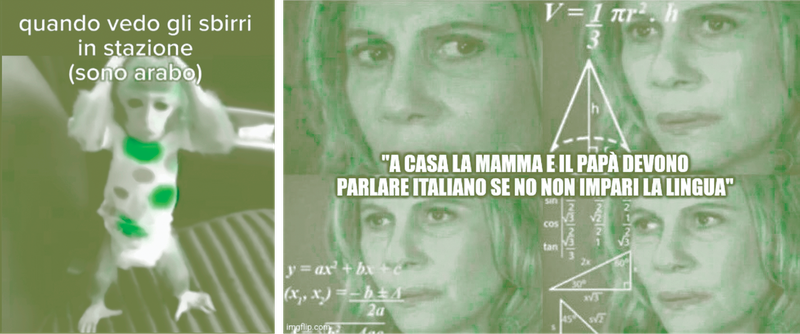
Fig 21: @arabiamemetica, Instagram. Translation from Italian: ‘When I see the cops at the station (I’m Arab)’
Fig 22: @arabiamemetica, Instagram. Translation from Italian: ‘At home, mom and dad have to speak Italian, otherwise you won’t learn the language’
The choice to use Italian also narrows your potential audience. When you create a meme, do you have an audience in mind?
Our primary audience – the one we think of before posting anything – is simple: people like us. Children of the Arab diaspora, born and raised in Italy, carrying layered, contradictory, and at times burdensome identities—yet full of sharp insight. We speak to those who, like us, have learned to navigate a system that often views us only as marginal, problematic, or exceptional. Those who have developed a keen instinct for spotting violence—even when it’s delivered in calm tones and polished language.
Our response isn’t to shout louder or seek legitimacy in the usual spaces. We’ve chosen another path: irony. A form of soft power—an unconventional weapon we use among ourselves, and now transcribe into Italian, with all its biting edge.
We don’t take ourselves too seriously, but we do take our surroundings seriously. And while we often wonder who will actually see a meme—whether it will stay within our peer group or fall into the hands of someone who’ll completely miss the point—we don’t worry too much. Some posts are designed to be decoded only by those with the right frame of reference. Others speak for themselves, though they may leave outsiders a bit confused.
In short, our main audience is those who already share certain codes. But if someone from outside stumbles upon them and decides to stay and listen, that’s fine—so long as they understand we’re not speaking to them. At most, we’re allowing them to listen in.
Some memes address broader issues like white feminism or October 7th, while others are rooted in more specifically Italian contexts. Can you expand more on this duality?
Living in Italy means, whether we like it or not, being part of this society. We contribute to its culture, inhabit its codes, and participate in its contradictions. But our lives don’t begin and end here: they’re deeply intertwined with the histories, memories, and languages of the places we come from. That dual belonging – always complex – also shapes the way we communicate.
That’s why our memes are never a straight line. They shift in tone, context, and register. They operate on multiple levels at once and reflect the multifaceted nature of who we are. Some are ironic – sometimes cutting – responses to topics we’ve been dealing with for years in exasperatingly repetitive ways (like certain crass interpretations of feminism (Fig 23).32 Others emerge from things closer to home: everyday dynamics, shared experiences, micro-humiliations, and the quirky life of the public square (Fig 24).33
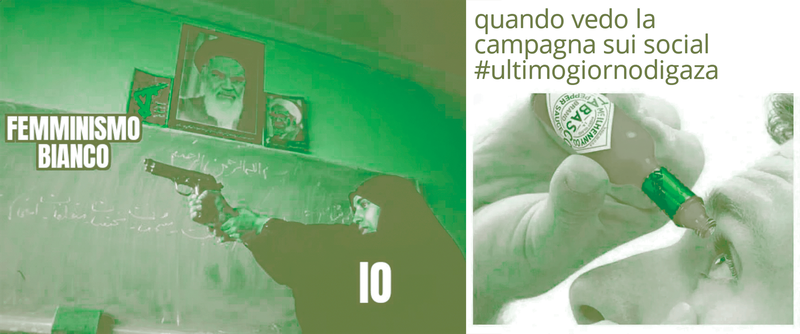
Fig 23: @arabiamemetica, Instagram. Translation from Italian: ‘White feminism; me’
Fig 24: @arabiamemetica, Instagram. Translation from Italian: ‘When I see on social media ‘#ultimogiornodigaza’ campaign’. #ultimogiornodigaza translated to The Last Day of Gaza was an Italian initiative circulated on social media that called for people to display a white sheet, representing a burial shroud, in their windows on May 9th, 2025 as a sign of solidarity with Gaza. The criticism refers to the fact that this initiative was purely symbolic and performative.
We move fluidly between these two tracks, without pretending to offer answers. Sometimes we’re speaking to the system; other times, it’s just us talking to each other. We laugh, and we make others laugh—but that laughter, if you pay attention, says far more than it seems to.
Many meme pages emerged in 2011, giving voice to satire against spaces that seemed to be open to but later turned out to be against counter-revolutionary waves, especially in Egypt and Syria. Your page started in 2024, under very different conditions and from different personal experiences. How do you relate to the events of 2011 and to those of October 7 in 2023?
The revolutions of 2011 and the subsequent counter-revolutions deeply shaped, even from afar, our paths of personal and collective growth. Many meme pages we follow and draw inspiration from were created by people who directly experienced the events of 2011; others were born from the voices of those raised in the diaspora after the counter-revolutionary waves extinguished – or tried to extinguish – the revolutionary spark.
These memes, raw and rough, but often filled with deep historical awareness, become tools for self-irony and emotional survival. A way to process trauma and avoid sinking into self-pity or the paralysis of despair. They are, in essence, a form of resistance to the mental and spiritual decay that the unresolved aftermath of the 2010s could easily impose.
October 7 marked a turning point for the diaspora in Italy. We became active participants in a moment that sparked the building of new, alive, and radical connections, identities, and political reflections. Our page also emerges from an urgent and shared need: to communicate, through irony, thoughts and positions that often have no space in the personal, professional, or academic contexts we inhabit. It’s a real pressure release valve, in an Italian environment where certain discourses are still demonized.
In doing this, we draw inspiration from those who have made the most of the 2011 experience, turning it into living memory and fertile ground for healthy self-irony. We inherit that legacy to build our own space – critical and liberating – post-October 7 revolution.
How important is virality to you?
We have mixed opinions on going viral. Some of us believe that becoming viral means creating content people can identify with—stepping out of self-referentiality. Others think that virality isn’t essential to the page, but can be a bonus. Being niche means being appreciated by a few, because not everyone can grasp or access out-of-the-box clarity.
Does the activity on your page have a political impact in everyday life, or does it end with the meme?
Creating a meme often sparks debate among us and provokes interesting analyses from others on the hidden or explicit meanings behind a deliberately ugly meme. We’d love for some memes to have a stronger political impact – like exposing nasty dynamics – but that requires time.
Have you noticed an aesthetic and political shift in how the Arab community is represented through memes in recent months and years?
Yes, and one point stands out: many of the recent memes from the Arab community share traits that might initially seem like flaws but actually say a lot. They’re ugly memes, in the most liberating sense: graphically messy, visually aggressive, worlds apart from the polished, sterilized aesthetics of mainstream platforms. Chaotic—because they reject linearity, and feed on accumulation, exaggeration, and disorder.
They’re brain-rot memes: intentionally absurd, worn out and exhausting, resigned to the world’s complexity, answering it with strategic nonsense—visually and linguistically. And of course, they’re ridiculous, but not naively so: they’re absurd with intent, a form of resistance, a coded language that only those with certain references can truly understand.
This aesthetic of ugliness and surrealism isn’t accidental—it’s a clear statement of intent. Discomfort becomes a way to respond to exclusion without asking for permission. Ultimately, it’s an aesthetic that doesn’t seek acceptance: it doesn’t care—it just wants to speak.
Choose the favorite meme you’ve made. How did the idea come about? Also feel free to share the meme pages or sources that inspire you.
Our favorite meme is the one featuring a father and son having a conversation about name choices. The son is named The Lion of Nablus,34 in honor of Palestinian martyr Ibrahim Nabulsi. The meme format is very old and recognizable, the graphic style is crude and messy, but the content is quite niche—that contrast represents the essence of Arabiamemetica (Fig 25).
Pages that have consistently served as our sources of inspiration and creative influence: (all Instagram pages) @levantinediva, @arabboomer.returns, @radical.arab, @lilithpal85311, @gigaphonememes, @_laughbdarija, @benbarkashitposting
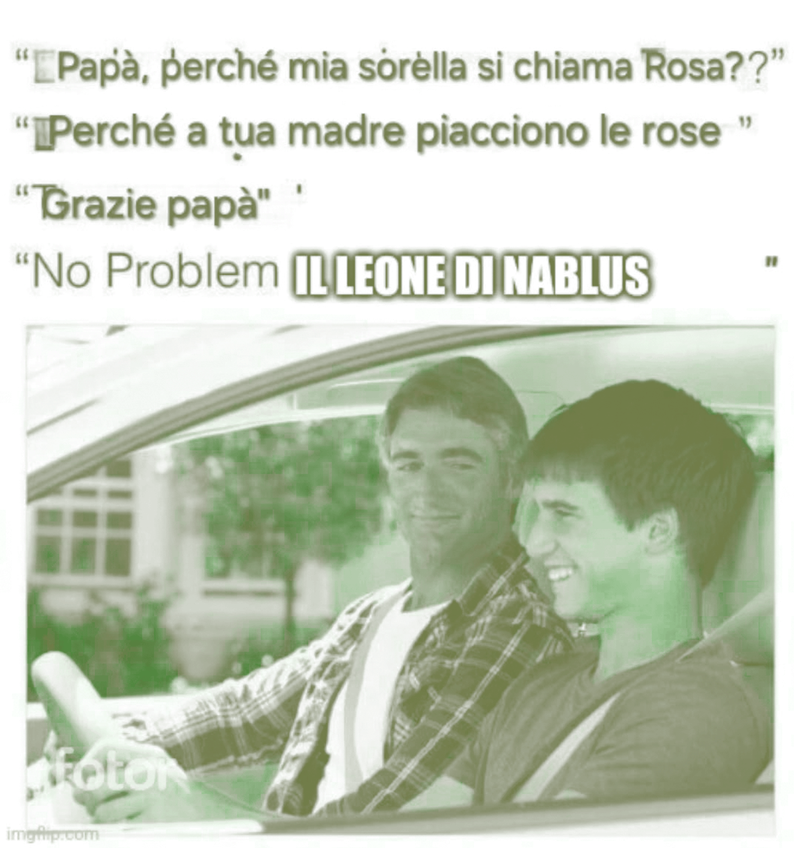
Fig 25: @arabiamemetica, Instagram. Translation from Italian: ‘Dad, why is my sister named “Rose”’? ‘Because your mom loves roses.’ ‘Thank you, dad.’ ‘No problem, Lion of Nablus.’
Conclusions
Through the interviews, what emerges is a vivid picture of how memes operate not only as humorous content but as active spaces for creative development and reimagining of Arab collective memory. In the absence of open forums for political discussion and public debate, memes have become powerful instruments for constructing new imaginaries/spaces where people/users can engage with politics, identity, and history on their own terms.
One of the most striking aspects is the way memes reshape trauma and historical experience through satire. This isn’t merely satire for its own sake, it’s a tactical one, to process collective wounds, resist dominant narratives, and reframe the present. It offers a language in which critique can be both sharp and survivable, humorous and serious at once. The symbolic world generated through this meme-making becomes a vital means of questioning the past and imagining the future.
The tactical logic of Arab memes lies precisely in this adaptability to different audiences. They compress the complexity of lived realities, spanning from disappointment, anger, absurdity, and hope, into formats loaded with meaning, often reflecting nascent or old disillusionment with pan-Arabist ideals, for example, or the persistence of these ideals in their full force. This article is not simply a celebration of meme culture, but a recognition of its importance as a site of cultural production and political expression, as the ones we analyzed are not just reflections of society, they are participants in shaping it. They ask questions, they provoke responses, sometimes activating inner short circuits, they open up dialogues where none seemed possible.
That’s why it is common to read users comments saying, ‘through this meme I vented my frustration’. Many of us have thought, at least once, ‘I didn’t know how to explain my disappointment or anger until I saw this meme’: these reactions reveal how memes function as emotional shortcuts, tools for expressing what might otherwise remain unspoken. In many cases, they dare to say what the mainstream media denies or avoid addressing, what conservative or fearful segments of society wouldn’t even allow themselves to think. In this sense, memes become a space where the unsayable finally finds form. At the same time it’s important not to romanticize the role of memes as unifying forces. Often, in the comment sections, users confront and even diss each other and engage in debate much like in the online forums of the 1990s and early 2000s. In this sense, the meme acts as a catalyst, gathering often highly caustic and conflicting opinions given the grand schemes and intense political issues that are already exposed to high fragmentation, just as the Arab and Arabophone communities themselves often remain divided and unevenly connected, sometimes clashing with panarabist sentiments, and at other times, reopening colonial-era wounds.
To see memes only as entertainment is to miss their deeper function: they are repositories of collective memory and creative lifelines, often serving as strategically-crafted history lessons in miniature, blended with fragments of everyday experiences, reconnected with TV shows, pop songs, and other elements of one’s cultural repertoire that act as relational threads linking diasporic backgrounds. For those who craft these digital artifacts, the task is not about volume or virality, but about precision, resonance, and timing. In a world saturated with visual white noise, these memes do more than respond to political and cultural realities—they are embedded within them. Their role is less about offering grand solutions and more about carving out small, unconventional, vital spaces where many can center themselves in the discussion, exercise self-representation, and assert their own voice.
-
(1) For more insights on Handala we recommend reading ‘Handala Will Age Again Soon’ by Jamil Sbitan at https://www.jadaliyya.com/Details/26128 and the LAP Network’s Handala Zine found at: https://librarianswithpalestine.org/wp-content/uploads/2019/04/HandalaZine.pdf. The name Handala comes from the Arabic word for the colocynth (حنظل, ḥanẓal), a perennial plant native to the Levant which bears bitter fruit, grows back when cut, and has deep roots. ↩
-
(2) Fig 1, 2 and 3. Screenshots from page 73-74 of ‘The Arab Spring: A New Era of Humor Consumption and Production’ by Wafa Abu Hatab, International Journal of English Linguistics; Vol. 6, No. 3; 2016, ISSN 1923-869X E-ISSN 1923-8703, published by Canadian Center of Science and Education. ↩
-
(3) Wafa Abu Hatab, ‘The Arab Spring: A New Era of Humor Consumption and Production’, International Journal of English Linguistics 6, no. 3 (2016): 70–87, https://www.researchgate.net/publication/303554271_The_Arab_Spring_A_New_Era_of_Humor_Consumption_and_Production. ↩
-
(4) Fig 5, 6, 7 and 8. Post Colonial Memes for Oriental Minded Teens, https://www.facebook.com/groups/132689757407773/, Private group. Created in 2017, 28.1K members as of August 2025. ↩
-
(5) Abnormal Arab Shitposting,https://www.facebook.com/groups/575269219314380/, Created in 2016, 2.8K members as of August 2025 born out of Abnormal Arab Memes page https://www.facebook.com/AbnormalArabMemes/. ↩
-
(6) Arab memes for depressed teenagers, https://www.facebook.com/ArabNibbasTale, Created in 2019, 78K followers as of August 2025. ↩
-
(7) Noura Tafeche and Basem Kharma, ‘Ecosistema di un meme Arabo’ (original Italian version), Arabpop n.6, Tamu Edizioni, p.118, 2024.; Noura Tafeche and Basem Kharma, ‘Ecosystem of an Arab Meme’ (translated to English), Do Not Research, 2025, https://donotresearch.substack.com/p/ecosystem-of-an-arab-meme. ↩
-
(10) Fig 9. melancholyasylum, Happy almost new year dear followers❤, 30th December 2023, Slide 3, Instagram, https://www.instagram.com/p/C1eoaa7Izn3/. ↩
-
(11) Fig 10. Melancholyasylum, ينعاد عليكم جميعاً ,3> , 11 September 2022, Instagram, https://www.instagram.com/p/CiXS_aGMCVO/. ↩
-
(12) Fig 11. Arabiamemetica, Cose da fare con la dolce metà (Arab version) , 28 October 2025, Instagram, https://www.instagram.com/p/DBrzmLqsx2Y/. ↩
-
(13) Fig 12. #siamoragazze *, 5 November 2024, Instagram https://www.instagram.com/p/DB_PKSOszBY/. ↩
-
(14) Fig 13. panarabistmemes, Nakba, 20 May 2024, Instagram, https://www.instagram.com/p/C7M4rlXs7V2/. Fig 14. panarabistmemes, Arabic class, 6 June 2022, Instagram https://www.instagram.com/p/Ced2YYAM7KZ/. ↩
-
(15) https://instagram.com/onewiththeinternet. Fig 15. onewitheinternet, Saddam, 30th July 2025, Slide 1, Instagram, https://www.instagram.com/p/DMtpxgSI788/. Fig 16. onewitheinternet, Some Call, 14 January 2025, Slide 1, Instagram https://www.instagram.com/p/DE0VLe8T8NI. ↩
-
(17) The incident involved a clash in July 2025 between Druze militias led by Al Hajari and Bedouin families in the Swaidah area of southern Syria. Government forces intervened following these hostilities. The fights were marked by significant sectarian violence, with government forces accused of carrying out massacres against the Druze because of their religion. To learn more about this issue, we recommend reading the Al Jazeera article ‘Why did Israel bomb Syria? A look at the Druze and the violence in Suwayda’ found here: https://www.aljazeera.com/news/2025/7/16/why-did-israel-bomb-syria-a-look-at-the-druze-and-the-violence-in-suwayda. ↩
-
(18) Fig 17. Melancholyasylum, *♥ كوكتيل ميمز للحبايب * May 18 2025, Slide 7, Instagram, https://www.instagram.com/p/DJy12nXMCrc/. ↩
-
(19) Melancholyasylum, Iraq is like an obsessed ex that won’t let you move on #Syria #Fyp, 12 April 2025, Instagram https://www.instagram.com/reel/DIWC1eyM-lm/. ↩
-
(20) Melancholyasylum, Why would Imamu say this? #Syria #Fyp, 5 May 2025, Instagram, https://www.instagram.com/reel/DJRI25OMtoh/ Meme translation: Arabic sentence says ‘curse his soul’ referring to Hafez al Assad, Bashar’s father. The sung part says: ‘Imam Ali and the lion Bashar’. ↩
-
(21) Nickname for ex-president of Syria, Bashar Al Assad. ↩
-
(22) Fig 18. Melancholyasylum, Don’t solve it or else I’m in trouble, 7 January 2024, Instagram https://www.instagram.com/p/C1zX_JcIqTW/ ↩
-
(23) Fig 19. Melancholyasylum, Ali Al Deek is an industry plant, 26 April 2025, Slide 9, Instagram https://www.instagram.com/p/DI6I-_fMfYj/. ↩
-
(24) In Syrian Arabic it can be translated as ‘I vented my frustration, I’m speaking seriously’ to mean that the meme let out the user’s frustration. ↩
-
(25) Tafeche and Kharma, ‘Ecosystem of an Arab Meme’, Do Not Research, 2025, https://donotresearch.substack.com/p/ecosystem-of-an-arab-meme. ↩
-
(26) Hadi Afif, ‘The Core of it All: Internet aesthetics as tools of resistance, from driftcore to corecore and other algorithmic undergrounds’, ICON, 2025, https://icon.ink/articles/the-core-of-it-all/. ↩
-
(27) Translation: Bashar the cowardly president. ↩
-
(28) Fig 20. Melancholyasylum, بيشو، الرئيس الجبان 27 September 2022, Instagram, https://www.instagram.com/reel/CjAeQPMgcZm/. ↩
-
(29) Melancholyasylum, Pimp my ride, 22 March 2025, Instagram, https://www.instagram.com/reel/DHgBWnqsbna/. ↩
-
(30)The creator(s) prefer to remain anonymous in terms of being a multiple identity or a singular. ↩
-
(31) Fig 21. Arabiamemetica, 1312, 28 October 2024, Instagram https://www.instagram.com/p/DBr0lbiMa9W/.; Fig 22. Arabiamemetica, Professor, 3 December 2024, Instagram https://www.instagram.com/p/DDH5lsAMsRG/. ↩
-
(32) Fig 23. Arabamemetica, White Feminism; Me, 4 November 2024, Instagram https://www.instagram.com/p/DB9ZgecsVIr/. ↩
-
(33) Fig 24. #ultimogiornodistaminchia https://www.instagram.com/explore/tags/ultimogiornodistaminchia/; 27 September 2025, Instagram https://www.instagram.com/p/DJc37ZJsDFL/?img_index=1. ↩
-
(34) Fig 25. Arabiamemetica, Orgoglio di mamma e papà, 6 November 2024, Instagram, https://www.instagram.com/p/DCBjtXtMAzO/. ↩