chapter
INFORMATION SMUGGLING
Augustina Lavickaitė
My late grandfather used to say that each generation has its own tragedy. For him, it was the mass deportation of Lithuanians to Siberia and the struggle of living under the oppressive regime of the USSR. For my parents, it was fighting for independence and building a life out of the ugly remains of communist rule. The list goes on, generation after generation, of trauma and oppression, and this struggle seems to have become a matter of pride, an important part of Lithuanian national identity.
My generation grew up without a tragedy of our own. We heard the stories of our relatives and we felt a sense of danger as if waiting for something bad to happen. There has always been a feeling that we need to be ready to do something when the time comes, but it’s not clear what we are supposed to do or how to know when the time has come. russia’s war on Ukraine and Lithuania’s location in between two pieces of russian territory made the trauma for my generation an even more urgent possibility. I found myself looking for narratives in the past, identifying connections and similarities, and, in that way, searching for a sense of control over the present and the uncertain future—as if saying, this has happened before, it might even happen again, but here is what people did and what worked.
In my search for a narrative, I came across a repeating gesture of carrying, smuggling, bootlegging information back into the Lithuanian community in order to sustain it. Not as a ritual or a cultural tradition, but as a practice of media production; an act of publishing and making something public, which puts specific emphasis on the materialities and processes of information transportation and distribution, rather than the content and its consumption.1 Between 1866 and 1904, book smugglers carried Lithuanian books from print houses in modern day Kaliningrad and Poland to farmers and churches around lands occupied by the russian empire. Only 40 years later, between 1944 and 1953, the partisan movement resisted the Soviet Union in part by printing leaflets, newspapers, and books on their fight for independence, the Lithuanian language and farmer’s rights. To understand the urge to publish as a way to resist and what it means to today, I frame these case studies through information warfare and media ecologies.
Information warfare and publishing
Information warfare relocates conflict from the frontline to the entire country and its population. In this format of conflict, information is not only the tool for warfare but also the setting of the war – it is within the information that the warfare is taking place. Information consumers are the territory of warfare and their attention is to be fought over, whether it is for political gain or corporate monopoly.
As a response to information warfare, information smuggling is an act of publishing, of making something public. It is delivering a specific narrative to a group of people who would otherwise not have access to it. It is validating the smuggled information by stating that it is important enough to risk lives for. On the other hand, information smuggling is also about making a public. By smuggling information, a public is created, and it exists and develops around the circulating content—here distribution becomes a crucial part of the work. Smuggling information ensures that a community survives, but it also equips the same community for resilient growth and expansion. Therefore, it ‘can no longer be seen merely as a criminal act, as the state authorities would claim, but becomes part of social protest against different oppressions.’2 In the context of an oppressive regime, the role of these individuals becomes two-sided – the state views them as criminals, while most locals praise them as heroes. The divide is clearly visible, for example, in the difference between USSR versus partisan archives. This situation is, of course, not limited to information smuggling, it covers any type of smuggling, which threatens the state’s authority over its people and the mobility of its goods.
Recently, a kind of information smuggling has formed in the digital environment—The Internet’s Dark Forest is a metaphor for survival tactics of alternative communities and truths. The concept comes from Liu Cixin’s The Remembrance of the Earth’s Past, and connects directly to the partisan activities in Lithuania and beyond. The affordances of the internet’s metaphorical dark forest and the information smugglers’ literal forest define the type of communication that can take place—both naturally gravitate towards safer, more private modes and tools of communication. A key difference is the possibility to exist within and outside of the Internet’s Dark Forest—something that was nearly impossible in the physical context of information smuggling.
Material context
The minute you understand architecture to be the relation between the event and the physicality, between static material and a dynamic ephemeral event, you understand that this relation can move both ways. You can start from an event and ask what kind of architecture it needs or you can look at the building and say what kind of event might have happened here or what kind of event that sort of enclosure, that sort of material syntax, will enable.
Head of Forensic Architecture, Eyal Weizman3
Contemporary media discussions, especially recent ones surrounding fake news and disinformation, often focus on issues of content and its consumption. However, studies suggest that the most unique characteristics of fake news are media infrastructures, and social and technological circumstances enabling its spread.4 This suggests that focusing on the structures allowing content to be produced and shared could lead to more successful attempts at identifying and controlling fake news. Information smuggling reflects the same insight—the forest terrain, it’s affordances, and the underground network of partisans were the defining elements of the resistance. In this way, the forest operated not only as a backdrop to resistance but as part of its media infrastructure—shaping production, circulation, and concealment in much the same way that urban squats or pirate radio stations have served other movements. Understanding the forest as an active element in the media ecosystem places it within a longer tradition of improvised, embedded infrastructures that tactical media practitioners inhabit and adapt to hostile conditions.
The word smuggling implies borders (between countries, between a forest and a city, etc.) and two different environments (regimes, legal frameworks, taxes, ideologies) on either side. The practice of smuggling takes place in the context of borders which historically, geographically, and geopolitically allow or even require smuggling – whether of information, people, or goods – to occur. Borderlands, such as Lithuania between the West and the East, create precarious conditions to which smuggling becomes an answer and a form of resistance. The social and cultural context of smuggling also informs the content being smuggled and the shape it takes. For example, religious books and farming manuals were the first things to be smuggled to a deeply religious, Lithuanian-speaking audience of farmers. On a more radical level—the russian regime profited from collective farms and a degenerate alcoholic society, so smuggling books was a symbol of education and culture. Meanwhile, the landscape and the actual materiality of the geography actively participate in the distribution and logistics of smuggling – forests allow hiding, rivers provide a natural border, mountains give an advantage to those skilled to cross them, etc. John W. Donaldson uses the term ‘arcifinious’ territory to describe states with natural defense capabilities—forests, rivers, mountains, but also deserts and seas. These affordances can exist naturally or be built artificially with defensive or offensive strategies in mind (Stefan Helmreich’s concept of ‘infranature’).5 In the case of Lithuania, the forests within and surrounding the country offered an ambiguous space where resistance and smuggling could thrive.
Information smuggling in Lithuania
The practice of information smuggling is deeply rooted in an environment of oppression and cultural erasure. It is this undebatable reality which gives rise to all further discussions of resistance, its reliance on media and networks, its successes and failures. The specific case of oppression here is the repeated attempts at the russification of Lithuania.
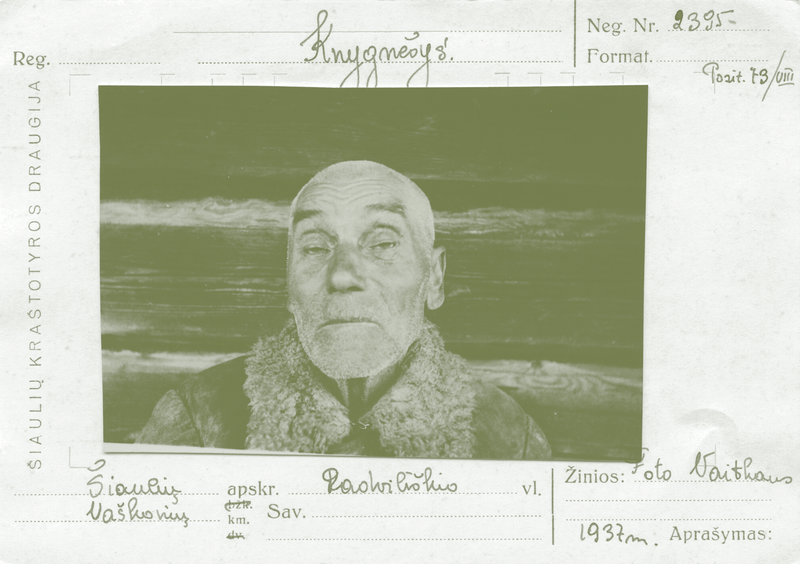
Restricting freedom of speech, disconnecting the society from the West, limiting communication and outside sources, censuring culture and education—apart from the obvious physical violence and destruction of the country, these forms of oppression describe information warfare in Lithuania as well as hybrid battles over meaning and culture of the 20th and 21st century.
Book smugglers (1866-1904)
In an attempt to russify Lithuania and isolate it from its history, Lithuanian language, publications, and any cultural activities were banned for a period of 40 years. With a population of barely 1 million people and no physical power to stage a military uprising, Lithuanians needed to find alternative methods and networks of preserving their language, culture, and national identity. Printing and reading Christian books in Cyrillic was equivalent to renouncing faith altogether, so the first material to be smuggled into Lithuania were prayer books, published mostly in German-controlled East Prussia and distributed in religious communities. Soon, however, the spectrum of printed matter expanded to include non-religious books as well as periodicals, newspapers (Apszvalga, Varpas, Ukininkas, Vienybe Lietuvniku), and other patriotic and political content. These prints were usually smaller than modern newspapers, similar to the pages of a book. They contained news, fiction, poems, and songs, and also included tips on smuggling books and crossing borders without being caught. Although small underground resistance groups were quick to form between students and members of the clergy, the smugglers acted alone, crossing the German-russian border at the risk of being shot, deported to Siberia, or jailed. Books used to be hidden in sacks of cheese, eggs, or bread; others strapped tool belts and hid newspapers under thick clothes. An estimated 5 million copies of printed materials were smuggled during press prohibition.6 After the failure of the russo-Japanese war and the growing awareness of how ineffective the ban was, it was finally lifted in 1904.
Partisan press (1944-1953)
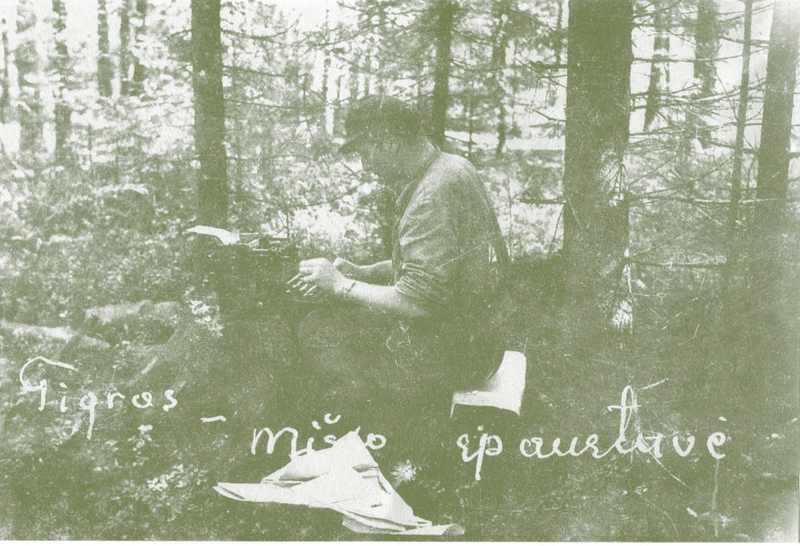
Forty years after the lifting of the publishing ban, Lithuania was once again fighting for its independence from russia. In 1944, when mass mobilization, arrests, and shootings of disobedient citizens began, thousands of armed Lithuanians retreated to the forests to avoid being forced to join the russian army and, instead, form guerrilla groups. Family members often had to join to avoid being targeted as a source of information. The ranks included teachers, high school students, priests, and officers, but mostly peasants, which was shocking to the russians, who did not expect working people to resist the working people’s government. Lithuanian partisans would strike unexpected blows and hide in forest bunkers for longer periods of time. These bunkers would be installed in homesteads, forests, swamps, riverbanks, and sometimes even in wells. Partisan groups usually consisted of 5-15 people and each group had several well-equipped and camouflaged bunkers to move around in. To exchange information on their positions and other important issues, partisans communicated through ‘legally’ living peasants and farmers and, rarely, through direct meetings. Partisan press first took the form of leaflets published underground, describing the political situation of the time and containing appeals to the population with various warnings and recommendations. Later on, larger groups of partisans published their own books and newspapers with news from Lithuania and the world, explanations of the government’s policy, and information about their struggles. In total, the partisans published about 80 periodical publications, some of which had a circulation of 5-6 thousand copies.7 russia’s revival of communist propaganda made sharing partisan ideology extremely important to keep peasants from joining kolkhoz (collective communist farms) and to maintain the fighting spirit associated with the expectation that the West would declare war against russia. Partisan groups gradually faded as the oppressor found ways to infiltrate partisan ranks and torture captured participants into giving away important information. In less than 10 years, over 20,000 partisans were killed and about 2,000 fighters and 16,000 supporters were arrested and deported.
Media Ecology
Ecological thought, once unleashed, permeates everything. It is as much movement as science, with all the motive, restless energy that word connotes. Every discipline discovers its own ecology in time, as it shifts inexorably from the walled gardens of specialized research towards a greater engagement with the wider world.
James Bridle8
Ecology has been introduced in the context of media as a way to study the effects of communication on how humans think and behave. Media ecology asks what kind of environment results in the existence of that specific media and what kind of elements (human, nature, technology) are needed for it to form.
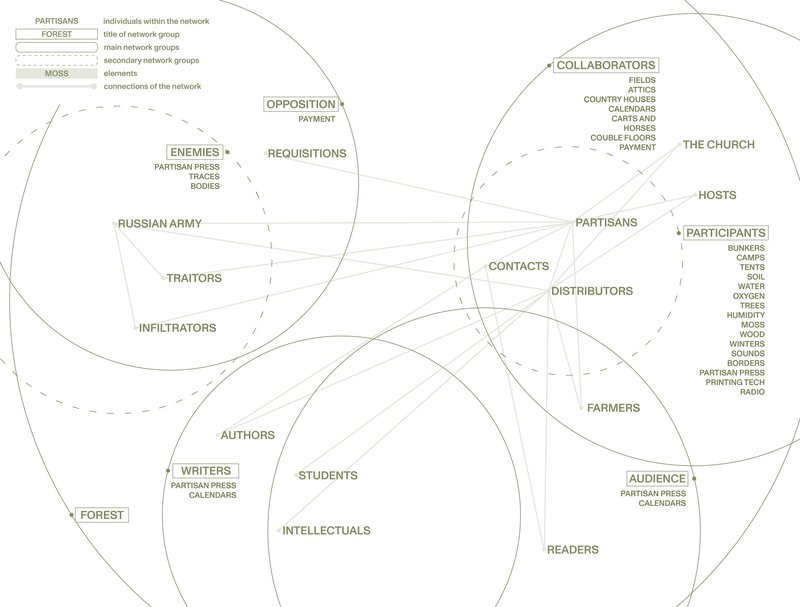
The complex message system of the two information smuggling cases suggests the following interpretation—information smuggling as media production and the forest as a media infrastructure all come together to form a literal ecosystem (of objects and beings) as well as a tactical media ecosystem (of routes of information, the terrain, and the smugglers). Ecology offers a way of thinking through the case studies and analyzing the repeating dynamic that takes place within the forest.
The Forest
As I tried to understand information smuggling, I engaged with state-owned archive material (images, sketches, maps), memoirs, and historical and archaeological sources. The two case studies overlapped in physical territory, many of the existing bunkers and tactics being reused in later struggles. It seems as if these instances of information smuggling are not isolated cases, but an ongoing relationship between the Lithuanian people and the territory they inhabit. And so, as I looked for a red thread, I eventually stopped distinguishing between book smuggling and partisan press—after all, they represented the same narrative. I did, however, group my findings into four categories: network, infrastructure, terrain, and media.
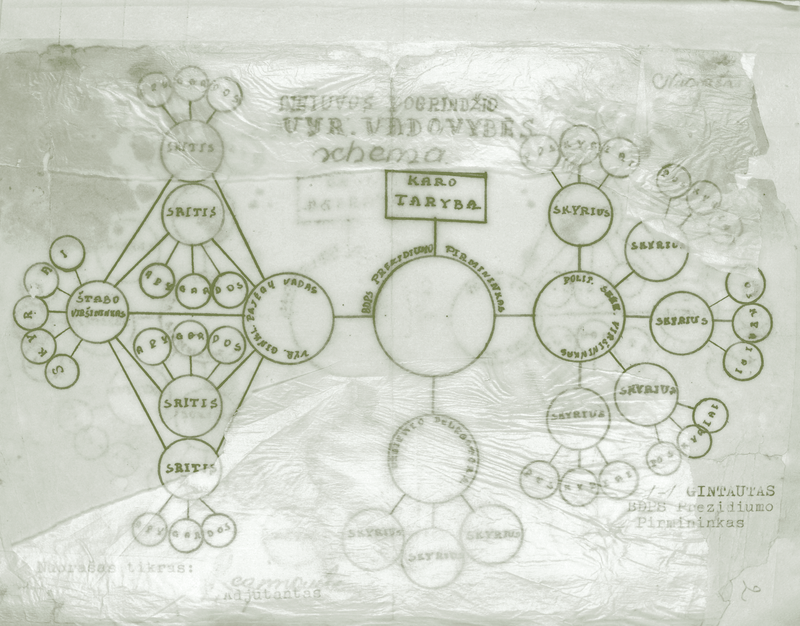
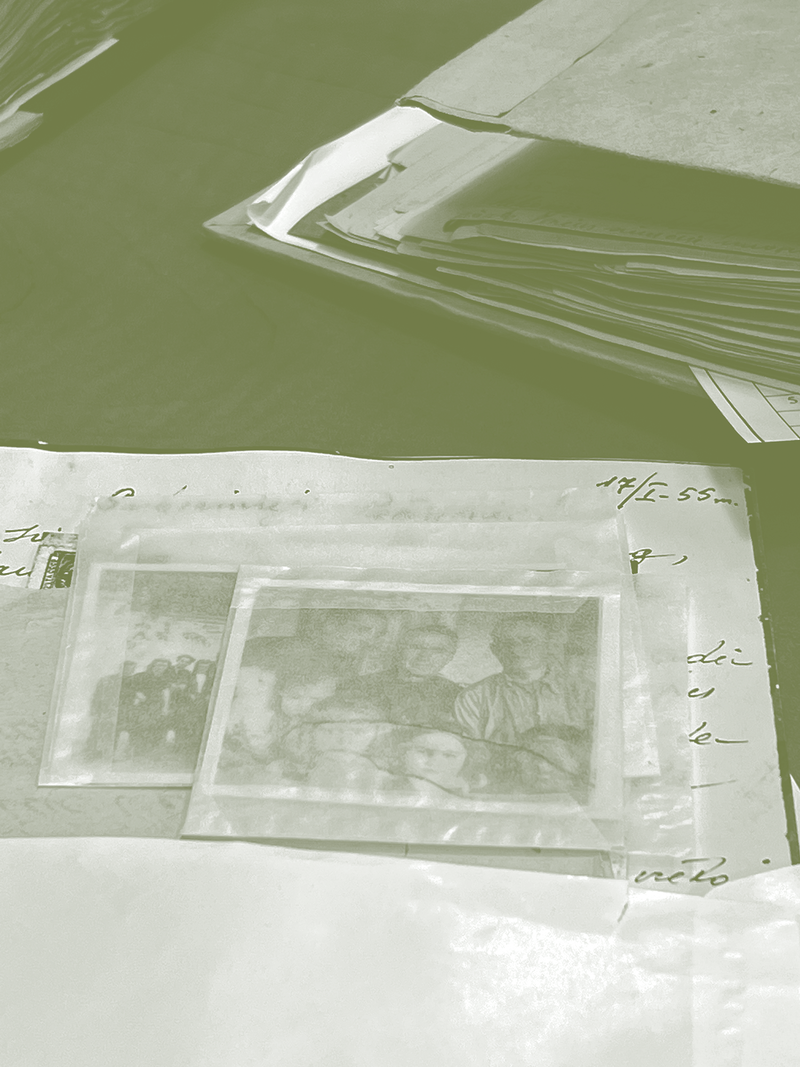
Network: the individuals and groups that participated in information smuggling.
Information smuggling relied on a wide network of individuals who each played a specific role within the media ecology of the forest. Many information smugglers were young men from rural areas with no military background, forced to leave behind everyday life after the russian occupation. Others contributed by writing, distributing, or hosting the underground press. While some teachers and students sent in texts from outside the forest, most of the content was written from within. Information smugglers were responsible for collecting and distributing material, which helped build stronger ties with local populations. Farmers, printing house workers, students, intellectuals, and even priests formed the surrounding support system by providing materials, shelter, and circulation routes. In attempts to reach russian soldiers, information was smuggled through newspapers, scattered in town squares. Despite the state’s efforts to disrupt this communication through traitors, infiltrators, and censorship, the forest network adapted.
Infrastructure: the physical structure that connects and organizes a network.
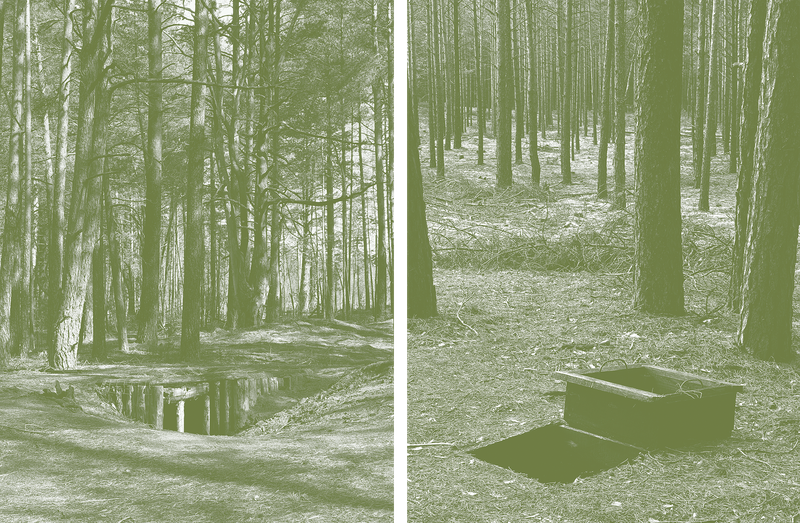
Thousands of bunkers across Lithuania make up the infrastructure of information smuggling, hidden beneath barns, stoves, wells, gravel, and inside homes. The way they looked, where they were, and what strategic function they served evolved alongside the resistance. And if no bunker was available, temporary shelters were dug into fields and disguised with soil and wooden planks, allowing partisans to be ‘buried’ during the day. Country houses and their architectural voids, such as cellars, attics, gaps between beams, were also repurposed as storage and distribution sites for print materials.
Terrain: the land and its elements.
Hiding places needed to be strictly camouflaged and controlled: no cutting of grass, no breaking of branches in the surroundings, no following of the same paths, no moving into new bunkers too quickly. The location and the structure of bunkers were determined to a large extent by the soil type. The light, sandy soil of the southern region was the easiest to dig up and quickest to be distributed in the surrounding areas. Building bunkers near large bodies of water, such as rivers, made it easier to dispose of soil and sand. On the other hand, high groundwater was to be avoided due to constant flooding of bunkers. The vegetation surrounding the bunker was another important detail. A certain type of moss is marked as a disadvantage to camouflaging a bunker installed in the forest. During the day, this moss dries up and footprints remain visible for a long time; if the same route is taken several times, a clear path remains. Living conditions in the bunkers were very poor—water seeped through the walls and ceiling, and there was a lack of oxygen. The first few days in a new hideout were often the most difficult—it was cold and humid, and the space had to be warmed gradually with body heat and breath. After spending a winter in the bunkers, the partisans who would come out were very pale, with swollen faces. Agents would be able to notice such physical signs, identify partisans and know that a bunker must be nearby.
Media: tools and formats for storing and transferring information.
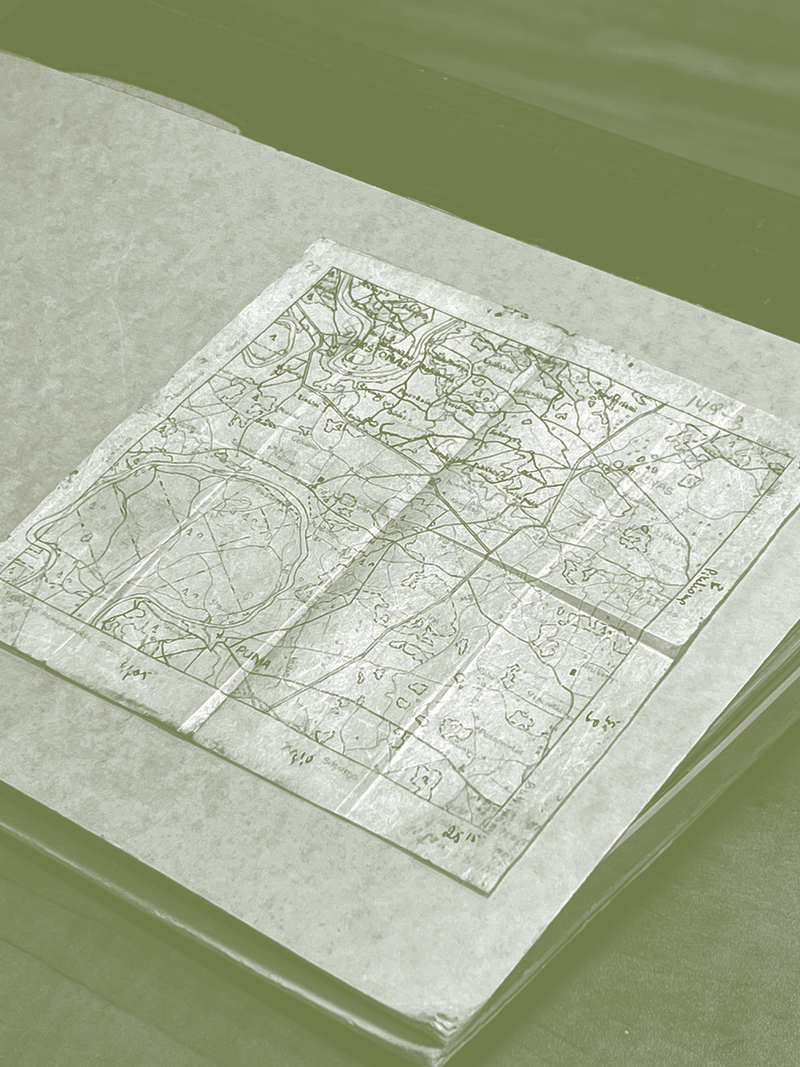
More than fifty newspapers were published in Lithuania during the partisan resistance (1944–1953), with periodicals appearing across all regions. Print runs and formats depended on the available tools, which were limited and often improvised. When no other tools were available, newspapers were typed by hand in small quantities. Most were printed using handmade rotators, which enabled larger circulation despite poor ink and paper quality. Hectographs were also common. In 1950, a few partisan groups gained access to letterpress machines, which improved the quality and speed of printing. In parallel, partisans used radio receivers hidden in bunkers to listen to international broadcasts and pass on news to the local population. The confiscation of radios by occupying forces made this form of information transfer rare and highly valued. The use of media in information smuggling cases also appeared in more indirect and violent ways. For example, even the corpses of partisans became a means of communication—the russians left bodies in public spaces to provoke a reaction from relatives and, in this way, identify resistance networks or extract further information.
Identifying and outlining this media ecosystem requires bringing together little pieces of history – moss, soil, attics in barns, newspapers typed by hand, bodies of the deceased used as bait – from memoirs, archives, archeology reports, and artistic interpretations of the period. Finding and analyzing this material is a detective’s work, a process of discovery, partly because of the nature of the underground resistance and partly because of the brutal force it was countered with. This results in an abstract and entirely non-linear narrative taking place on the same land throughout decades. Land, which we inherit alongside conflicts from previous generations.
Tactical media has always been about adapting to and embedding within existing infrastructures, from urban squats to pirate radios. Recognizing these infrastructures reveals how and why resistance takes the shapes it does. The forest, as a tactical media infrastructure, has a deep historical precedent in information smuggling, and continues to shape resistance today, in Ukraine, by unintentionally archiving conflicts (ex. drone fiber-optic cables on tree canopies), allowing concealment (ex. drone shelters and launch sites), and disrupting surveillance (ex. obscuring movement from above and masking thermal traces). Placing the forest in this context allows us to see it not as a passive backdrop, but as an active element in the circulation and preservation of information under occupation. In the future, its role could remain the same: a space where media can be produced, moved, and hidden when other infrastructures are compromised, and where the evidence of these acts endures long after the conflict has shifted.
-
(1) Lisa Parks and Nicole Starosielski, Signal Traffic: Critical Studies of Media Infrastructures, Urbana: University of Illinois Press, 2015. ↩
-
(2) Mahmoud Keshavarz and Hosrawi Sahram, Seeing like a Smuggler: Borders from Below, London: Pluto Press, 2022. ↩
-
(3) Marc-Christoph Wagner and Eyal Weizman, dirs., Forensic Architecture, YouTube video, 18:49, Louisiana Channel, 19 May 2022, https://www.youtube.com/watch?v=M5c9KrHHVMc. ↩
-
(4) Jonathan Gray, ‘“Fake News” as Infrastructural Uncanny’, New Media & Society 22, no. 2 (2020): 317–341. ↩
-
(5) Stefan Helmreich, ‘Nature/Culture/Seawater’, American Anthropologist 113, no. 1 (2011): 132–144. ↩
-
(6) Antanas Tyla, Garsviu Knygnesiu Draugija, Vilnius: Mintis, 1991. ↩
-
(7) Ricardas Cekutis, ‘Partizanu Spauda 1944–1953 m.’, Genocide and Resistance Research Centre of Lithuania, 11 January 2005, http://genocid.lt/Leidyba/16/cekutis.htm. ↩
-
(8) James Bridle, Ways of Being: Beyond Human Intelligence, London: Allen Lane, 2022. ↩