chapter
Radio Communities
Radio as Commons Practice
Juan Fortun and Grégoire Rousseau
Introduction
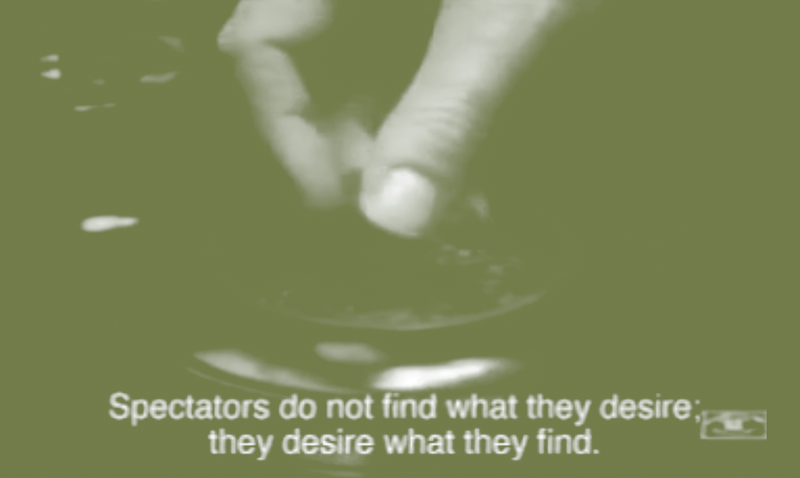
In 1925, the poet and futurist Mayakovsky wrote the poem Radio Agitator ‘To countries where the sun is without shadow, Into a million listeners’ ears words crawl along the antenna!…A worker of America and a worker of Chukhloma will join their voices in a single chorus…Drum out with your million tongues, Radio-Agitator!’ and directly positions radio as the international means of communication to unite workers without any physical limitations, as the invisible electromagnetic waves can travel freely around the globe. Mayakovsky’s poem manifests the dialectical process in which the voice empowers the world as the world produces a new space for the voice.1 One hundred years later, in 2025, the means of communication have multiplied and moved (mostly) from analogue devices to digital services. The emergence of social media transformed how information travels, how people connect, learn, and share everyday life anecdotes but also political ideas, conflicts and situated struggles. The temporality of sharing, or reading a post, may not exceed a couple of seconds, the time to swipe up or down. That is the time we can afford within our late capitalist society, the time granted to us between advertisements. The social media user is both the producer and the product within the privately owned and managed space. Let’s adapt the situationist statement of 1975 ‘The spectators do not find what they desire; they desire what the find’ to our times and propose that most surely the spectator does not find what they desire; they desire what the algorithm offers to them while their private data is crushed, analyzed and extracted for future commercial and political purpose.2 A strategy of resistance against this form of media extractivism stands for the re-appropriation of our time, our tactic is to produce a commons space to take time together.
The text below is an edited transcription of the panel discussion Radio Communities: Radio as Commons Practice, held during the pre-fair programme of MISS READ3 x lumbung Radio4 in Wedding in Berlin and curated by Station of Commons in October 2024. In the conversation, we explore radio labor as a social process that sustains and build community, solidarity, and resistance. We delve into challenges of funding independent radio. We share strategies for sustaining operations through mutual support and resource sharing, highlighting alternative economic models that resist capitalist pressures. Our discussion reflects on how radio practices address social relations within collectives to organize limited resources – time, energy, space, and finances – and proposes approaching radio as a commons.
We examine tensions in using mainstream social media for promotion, as they often conflict with the ethos of independent radio. Some collectives choose to minimize or avoid these platforms, seeking alternative channels that align with their values and preserve community integrity, while others embrace them, recognizing that their commoning efforts are more important than the infrastructures where their messages and hopes travel.
We also explore the deeper significance of radio as a medium for environmental and spiritual healing in regions devastated by extractive capitalism, and radio’s role in archiving and healing. For instance, Anguezomo Nzé Mba Bikoro highlights how historical recordings, once used as tools of oppression by colonial perpetrators, become tools of liberation and healing over time. The background noises and ephemeral aspects of radio capture lived experiences and testimonies of marginalized voices, transforming into powerful narratives for future generations, emphasizing radio’s capacity to preserve collective memory and cultivate intergenerational solidarity.
The crisis of connection that a global pandemic initiated also brought along subversive ways of connecting that value the auditory and the virtual—this was the case for many of the collective radio and sonic projects since 2020, with which many of the participants identify themselves. Now, after years of weaving community through ethereal airwaves, we gather to collectively discuss what whispers of hope we might find among us and think together how to re-activate the agitator role of radio.
The following radio and sound artists participated in this edited transcripted discussion: Sumugan Sivanesan (fugitive Radio), Manuela García Aldana (SAVVYZAAR, part of SAVVY Contemporary Berlin), Pascale Obolo (Afrikadaa), Icnelly (Radio Nopal, Mexico), Markus (Cashmere Radio, Berlin), Juan Fortun, Grégoire Rousseau and Eddie Choo Wen Yi (Station of Commons), Anguezomo Mba Bikoro (Berlin), Alessandra Pomarico (Firefly Frequencies).
To listen to the entire panel discussion:
https://archive.org/details/radio-as-commons-practice
Shaping Inter-local spaces of resistance through radio
Sumugan Sivanesan (fugitive Radio) – 31:54
The internet has evolved from a text-based space to a highly visual one, particularly with the rise of corporate social media platforms like Instagram and TikTok. When I first started working with ‘post-internet’ radio, I met individuals involved in building autonomous FM radio infrastructures—such as antennas, transmitters, servers, and broadcasting boxes. Many of them expressed how much they valued radio’s ephemerality, in contrast to the permanent nature of online content archives. The appeal lies in the fact that when something is broadcasted, it exists only in that moment; if you hear it while it’s live, you experience it, but if you miss it, it’s gone. This ephemerality is particularly attractive in a time when people are preoccupied with documenting every aspect of their lives, archiving their meals, and when their behaviors are tracked, their data mined, and potentially used against them in the future.
Pascale Obolo (Afrikadaa) – 1:03:34
I’m interested in the medium of radio because I believe it offers one of the few spaces that provide freedom for resistance in today’s world. Even though I come from the field of publishing, I feel safer in this medium. I have the impression that working in radio and curating content is currently the best avenue for activism. Unlike writing, where I constantly worry about being censored or losing funding, radio allows me to express myself more freely without those concerns.
Manuela García Aldana (SAVVYZAAR) – 00:06:33
SAVVYZAAR serves as Savvy’s space for experimentation. Through it, we’ve discovered we can connect with different geographies and share various forms of knowledge and resources for struggles we all face—struggles we often think we’re facing in isolation. This aspect has become especially important for us in the aftermath of the pandemic. Now that we have established the radio, we’re beginning to understand all the possibilities this sonic space offers us.
Lynhan Balatbat-Helbock (SAVVYZAAR) – 00:08:41
We held our weekly meetings online and often discussed how painful it was to be disconnected from social gatherings and shared spaces—simply being together, sharing meals. Radio emerged as a convivial format that created the sense of belonging to something collective. When you tune in at a specific time, say 6 p.m. every week, you develop a recurring connection through your radio device. You feel like, ‘I’m part of this’.
A podcast, in contrast, can feel isolating—it sits on a website waiting for you to click on it, creating the feeling that you’re listening alone. Whereas radio is an imagined collective being because it was produced with people you work with. Perhaps that part of the team is listening simultaneously, and that creates a commonly shared experience. It became a beautiful format for connecting to an imagined commons.
Icnelly (Radio Nopal) – 01:26:13
I found Sumu’s perspective very interesting on FM radio, while our discussion is focusing primarily on internet radio. It’s a bit strange because we’re expressing something that seems somewhat outdated. What I understand is that while the internet has its limitations, it also offers internet waves. Despite challenges like censorship, we still have a way to navigate that space and voice our opinions. Audio, as you mentioned, is currently less regulated compared to other media forms. While there are regulations in some places, we can leverage this aspect to our advantage. One unique feature of audio is that it allows for modulation of voice, which isn’t as easily done with images or videos. Furthermore, creating audio content is something that many people can do, although some may not have the knowledge or confidence to participate. This brings to mind what you said about Wedding (Berlin). For instance, Radio Nopal is based in a specific neighborhood in Mexico City, yet we also host programs from diverse locations, including Sweden and other parts of Mexico. It’s interesting because we’re discussing radio as if it’s a traditional medium, but so much of it is already happening online.
Markus (Cashmere Radio) – 01:23:37
It’s interesting to note that Cashmere Radio is now based in Wedding, which has a local focus. However, many of its members don’t actually live in Wedding, making it a bit strange to have a physical headquarters. It might be more effective to have a decentralized approach throughout the city to better reach people. Another aspect I appreciate about radio is its history, as it serves as a prototype for what the internet later became, similar to early bulletin board systems. We can envision radio as a network of different stations that, like the internet, share information across various neighborhoods. Each station could re-broadcast relevant content or choose to discard it and create a new show. This could lead to the development of unique and complex networks that might not align with our modern world.
Learning from radio
Lynhan Balatbat-Helbock (SAVVYZAAR) – 00:04:52
SAVVYZΛΛR was born during the pandemic in 2020. When everything had to close, we found ourselves facing canceled contracts and programs we had envisioned. Our exhibition, planned alongside Merzmusik—a collaboration we regularly have—was also canceled, leaving 15 artists we had been working with for months without a platform to showcase their work. We asked ourselves: How can we think about radio as a social practice and as a means of reparation? It is not simply about postponing the show; it is about acknowledging and compensating artists who have become invisible during this panic and pandemic. We sought to maintain our connections with these artists through sonic commissions, striving to keep the contracts in place and ensure that those involved in our programming were still compensated. This is how SAVVYZΛΛR was born.
Icnelly (Radio Nopal) – 00:10:41
Radio Nopal has always been deeply connected to the community—not only our radio community, but to Mexico City itself. It is a curious dynamic: we are an online radio that people around Mexico and the world listen to, yet we remain intensely local. There is something intriguing about using this global internet platform primarily to discuss hyper-local events, jokes, and cultural references.
For us, community is meaningful, though it is a complex term. At Radio Nopal, we have 60 programs running – from weekly to monthly broadcasts – and we organize ourselves in a sociocratic way. Rather than using hierarchical pillars, we operate in circles: technology circles, community circles, fun circles. You join whichever circles interest you. Some people participate in just one circle or none at all, while others like myself are more involved—I am in five circles… actually nine! [laughs]
The beauty of this system is that you can determine your own level of participation. For example, you might say, ‘I do not know anything about websites, but I want to learn and be part of that conversation’—and that involvement helps you share knowledge. Or you might want to engage with the technology we use, since we have developed a system called Mensajito that allows us to broadcast without a computer. We love physical spaces but are not fond of computers! [laughs] Anyone interested in learning about this technology is welcome to do so.
For us, community takes different forms: in how we organize the radio itself, in how we connect with the local scene. We have even connected internationally, participating in the Venice Architecture Biennale in 2023. At Radio Nopal, the concept of community is constantly evolving.
Throughout our six years, we have engaged with different types of communities. Initially, we were primarily connected to the city’s art scene. Now, we have shifted more toward the music community, with many DJs and producers joining us—we even organize parties now. Our community evolves just as we do, adapting to new circumstances and interests.
Juan Fortun (Station of Commons) – 00:23:31
…This is lumbung radio [pointing at the space]. This space is very temporary, and we have enjoyed this temporal nature. Since the last documenta started, we have been broadcasting from here, although we were already experimenting with various broadcasting methods – both sound and video – before that. Initially, we noticed that many of our peers and friends across Europe lacked space to perform. So, we decided to provide them with a platform, even though we did not have a physical space of our own. Our approach to ‘space’ is not about finding a physical location; instead, we focus on nurturing friendships and maintaining strong bonds. This sense of community allows our commoning actions to flow more smoothly. In a face-to-face, in-real-life context, these relationships help facilitate collaboration in our creative endeavors. That’s our approach in relation to space.
How radio practice sustain community?
Lynhan Balatbat-Helbock (SAVVYZAAR) – 01:17:04
I think it is also very charming that you listen to not only forms of emancipation through democratization of technology, which I think is amazing because not everyone is skilled in publishing practices or writing, but many people have something to say or at least amazing music to share, so everyone can actually contribute to the sonic. I also appreciate formats that are more collaborative and less curated.
Juan Fortun (Station of Commons) – 01:11:57
I know that radio is actually very good at asking the right questions, such as: How do we do something together? Through radio, people exchange ideas about how to collaborate. Through that process, they begin to consider others’ perspectives and develop empathy—which takes significant effort. In our current context, it is just two clicks and you are online, but in other contexts, you need a full transmitter. You must be careful about what you say because authorities might confiscate your equipment—which happened to many radio stations in Mexico and Colombia during difficult times. The value lies in the entire process, not just in radio itself. I am not diminishing radio, but suggesting that the whole process it involves carries much more significance than the medium alone.
Lynhan Balatbat-Helbock (SAVVYZAAR) – 00:21:20 SAVVYZAAR is basically a side leg of an art and cultural space. It is not our main activity to have radio per se, because we also lack the funds to maintain it. We still try—we do not have a radio program for the sake of having the pressure to fill it with content, but we try, when we have the funds, to commission perhaps a sound piece, whether from a sound artist or something experimental. Often we use our programming that is in our space, like the audio of it, to re-stream things. But we do not have radio for the sake of having a radio station. It is just one of the many means around the art space. We also have massive discrepancies, like, ‘Who is putting this up today? What are we doing?’ We do not have one fixed person, there is no one paid for SAVVYZAAR—it is a labor of love. Ultimately, while we are always seeking project funding, we rarely find projects that are exclusively focused on radio.
On rendering the process of commoning
Lynhan Balatbat-Helbock (SAVVYZAAR) – 00:28:20
I think the format of a podcast for archiving information, conversations, interviews is beautiful. However, we also have our internal, almost ‘guerrilla’ method of recording meaningful conversations. Not everything, though is meant to be disseminated and shared with everyone because some information or precious things should be protected. It can be an ultimate act of generosity to share something publicly and invite everyone into the conversation. For example, we have recorded lectures in our archives, all of which are open source. Yet, we also maintain our own type of guerrilla sonic archive.
Lynhan Balatbat-Helbock (SAVVYZAAR) – 01:28:34
I cannot fathom the future because I am trying to survive now – I cannot understand or imagine the future of radio – but something I find beautiful in forms of connectivity through classical radio occurred in the 1970s. There was this composer and musician, José Maceda, who composed a piece called Ugnayan. When you think about the Philippines, it is a very scattered place. We say the Philippines, but it consists of more than 7,000 islands. It is very disconnected. He created this piece that played on New Year’s Eve over 20 radio stations, playing the same piece at the same time. Everyone on these different islands could hear the same piece.
Radio is a very beautiful democratic vessel for restitution. If we think about José Maceda—he recorded sounds and, 15 years later, returned to the villages. As you mentioned, the appropriation of sounds and holding something captive that you do not understand, and possibly also falsifying content—he went back and said: ‘In these songs, your forefathers are recorded, and I want to give this back to you because it actually belongs to you.’ Radio could be a vessel to restitute what belongs to people in terms of what was held captive from them—to disseminate it.
Anguezomo Mba Bikoro (Berlin) – 00:56:15
My experience in radio came through examining archival history. Looking at radio production from as early as the 1920s, we see in the discs made in South Africa and Namibia by colonial perpetrators how those positions of historical narrative have been functioning. The very interesting thing about radio – as Lynn mentioned about the background noises – these elements are what make the radio alive, bring its value, and provide the testimonial evidence we need. In the cylinder disc, you have the background sound of what is occurring: what the perpetrator is doing to the person being recorded, who is subjected to this recording. Often they were forced through beatings, drugs, or alcohol to perform for those cylinder discs.
Importantly, many of these cylinder discs were lost or set aside for many decades. We do not discuss time traveling in terms of radio production, because the point is not how many people you reach, but how the sound waves travel through time and what they will mean to the listener. We do not think about specific descendants. What those people were saying over 100 years ago—descendants like me will understand the meaning. Much of what is spoken is in different languages. They have false translations into German—completely, entirely false. The way victims or survivors described their torture was not through description but through poetry and metaphors. Those poetry and metaphors come from specific cultural settings that only descendants will understand.
These recordings, instead of being used as the predator’s tools of oppression and tools of banking, become tools of liberation and weapons for the descendants years later. Another generation emerged when I was a toddler, using radio as a form of protest and healing. In a very different context, in 1989, my first radio experience was on cassettes. These cassettes were used in the hospital with children to testify about the treatment occurring there. These treatments were rarely documented on paper by the doctors or nurses in the hospital. We were able to catch predators and perpetrators within the hospital. Instead of receiving treatment, extensive abuse was occurring.
As Lynn mentioned, not everything archived needs to be listened to or made public. However, something happens when you hear these recordings as you time travel into the future. For me, this raises important considerations: the meaning of what we record in the present might not make complete sense immediately. Yet it becomes prominent in building forms of liberation, building organization, revolt, and healing, because these are testimonies of what has happened. These background noises that in the present might seem annoying or difficult, or might appear to break professionalism—these are actually the magic behind it. The background, what we call the dissonances, the black noise, will be the key to understanding what history has told us, how we should write or rewrite it, and what positions exist.
This enables understanding that when somebody speaks in a radio context, they might be telling certain truths or might not be able to express themselves in the way they want to.
Listening to the future
Sumugan Sivanesan (fugitive Radio) – 00:31:24
I agree that radio’s lack of visibility contributes to its subversive quality, which is part of what makes it so attractive. This applies to what we’re expressing; most people have the ability to speak. Sometimes, simply holding a microphone and voicing thoughts can be quite cathartic or liberating. Additionally, the concept of fugitive radio highlights the likelihood that no one is listening—it’s not just about the radio broadcast; rather, it’s the act of creating it that helps me connect with communities exploring media, urban space, networks, and social infrastructures in unconventional ways. I find this to be immensely valuable. I remember a time before the internet, and in my experience of creating fugitive radio over the last few years, I’ve noticed that for many people today, the idea of just picking up a microphone and improvising freely is something they have never encountered before. Nowadays, when people create media – and everyone is making media – they often choose platforms like TikTok or Instagram, seeking views and likes. As a result, fewer individuals are inclined to create something spontaneous, which contrasts sharply with my background in early net culture, indie media, and experimental music and arts. I believe it’s significant that the future of radio isn’t necessarily moving forward in an accelerationist manner, but is instead looking back to a different way of engaging with media, allowing us to sidestep what is often presented as inevitable. There is a need to invest in a past potential future that might still be realized, pursuing the liberating promise of the internet before it transformed into a more authoritarian system. We must reinvigorate alternative histories and explore different trajectories.
Manuela García Aldana (SAVVYZAAR) – 01:33:19
I wanted to share some thoughts about the future of radio. In Abya Yala, for example, the future is often perceived as being rooted in the past. The Sankofa bird embodies this concept, looking back to learn and shape the future on the African continent. I believe this is a crucial approach. When we reflect on the history of radio, community emerges as a key aspect. Moments like this, where we gather to listen to one another, foster a sense of belonging. Even if someone listens to this later on, they still become a part of that community. So, as I think about the future of radio, I just wanted to express these reflections.
Alessandra Pomarico (Firefly Frequencies) – 01:39:52
I want to quickly discuss the importance of archives as a means of testimony, a way to transmit knowledge to future generations and evoke the past. This preservation of knowledge is crucial. However, we also need to consider the weight and cost of our data, and energy consumption. In light of climate change and resource scarcity, we need to think about how we can maintain our data practices responsibly. Online radios are fantastic tools that have led to the proliferation of many incredible autonomous and community radio spaces. However, they come with a weight, a cost, and an ecological impact due to the data storage. I realized this when one of the companies we subscribed to for keeping our radio alive began erasing our content. We had to find an alternative solution, and that experience truly showed the significant resources required to maintain the ongoing archives. Radio waves are invisible, and we don’t see the material reality behind them, including the energy required to keep the technology running and store our extensive archives. I have a question regarding what happens during storms or hurricanes when the internet goes down. It might be interesting to explore the interplay between radio and other forms of sharing voices, such as recording, transmitting, transcribing, and translating. These practices of listening and sharing voices may not rely as heavily on technologies that can fail easily, potentially leading to the loss of everything we’ve built.
Anguezomo Mba Bikoro (Berlin) – 01:43:39
I’ve been reflecting on the various projects I’ve undertaken over the years, particularly related to architecture. For instance, take the colonial architecture in Salvador da Bahia. In these buildings, you can hear the echoes of the testimonies from enslaved individuals through the traces left by ants navigating the structures. The vibrations created by these ants actually carry the stories of the past, as they were built by those very same enslaved people. My grandmother, despite being illiterate in the 1950s, possessed a profound understanding of the natural world, especially regarding plants. She believed that everything is interconnected and rooted in the soil. In Bahia, we explored how plants can emit frequencies that hold the memory of events buried within the earth. She would select specific plants from different regions of the forest, drawing from various villages and ethnicities, as many of these tribes no longer exist. These plants served as living testaments, producing unique sound frequencies that resonate with our bodies when we consume them. This approach to archiving is different from traditional methods. For me, it feels akin to a radio system from the 1950s, perhaps even before that. My grandmother didn’t create this knowledge; she learned it from her parents and grandparents. In my own experience, I found a connection between this ancient wisdom and modern technology through cassettes. The relationship I have with these sounds and plants is deeply personal, rooted in my family history. Because I learned it, it was very intimate, it’s in the family. This has led me to consider the concept of technology as a means of data preservation.
It’s very important to be mindful of what we say. Although I hadn’t considered it before, it’s certainly true. As I’ve mentioned, it doesn’t have to be documented; everything exists within us. If I absorb a specific plant frequency from a place that has experienced trauma, my body will react to that. This is especially relevant when working with herbalism and similar practices, as they can have particular effects on the body. This type of knowledge, along with the concepts of resistance and resilience, is something our current technological future doesn’t fully comprehend; it’s not entirely fluent in these ideas. I envision that to truly understand the future, we sometimes need to look back to the past. I believe the future of radio will be ecological. It will exist in the airwaves, in the remnants of the world, and within the soil and plants. In 500 years, we may not have the internet, computers, or other devices, but we will still have plants and ants. They will continue to teach us. Our bodies will evolve in how they function; we won’t just listen with our ears—we’ll listen with our skin, our cells, and everything around us. This concept is what I was trying to convey with my story from the hospital: radio is both ephemeral and infinite. I truly believe that the future will be much more connected to the soil.
Credits
Edited and Transcribed by Juan Fortun & Grégoire Rousseau
Panel discussion moderated by Grégoire Rousseau and recorded by Station of Commons and relayed by SAVVYZAAR and Reboot.fm (88.4 FM in Berlin).
-
(1) Robert Bird, ‘Envoicing History: On the Narrative Poem in Russian Modernism’, Slavic and East European Journal 51, no. 1 (Spring 2007): 53–73. Contains Mayakovsky’s ‘Radio Agitator’ poem in Russian and English translation on p. 65. ↩
-
(2) Guy Debord, ‘Refutation of All Judgments, Pro or Con, Thus Far Rendered on the Film “The Society of the Spectacle”’, 1975, UbuWeb Film, 4:12, https://www.ubu.com/film/debord_refutation.html. ↩
-
(3) MISS READ: The Berlin Art Book Fair & Festival, https://missread.com/. ↩
-
(4) lumbung Radio is an inter-local online community radio initiated for documenta fifteen. For a list of participants radios see https://lumbungradio.org/. ↩