chapter
Remember to remember
Wanderlynne Selva
We are still around
We reassemble to share echoes of a manifesto drafted, but never quite finished. The original author, Daniel Pádua aka dpadua,1 was a Brazilian activist and technologist, a self-described net artisan, and our relative. Cancer took his life in 2009. Too early for him, too early for the many people who miss his presence to this day. It happened on the 20th of November, Dia de Zumbi dos Palmares.2 On that day, many of dpadua’s hundreds of friends and admirers were in São Paulo for the second edition of the Digital Culture Forum. Others were in Chapada dos Veadeiros for the Popular Cultures Festival, and others still felt his loss across the continents. On that evening, all of us decided to sing, play, and dance in his honor. We refused to give in to pure sadness. Partying is our language of cultural resistance, and he always gave a great example of such. His presence and influence are still felt among us. Encantou-se, mas ainda está por aí.
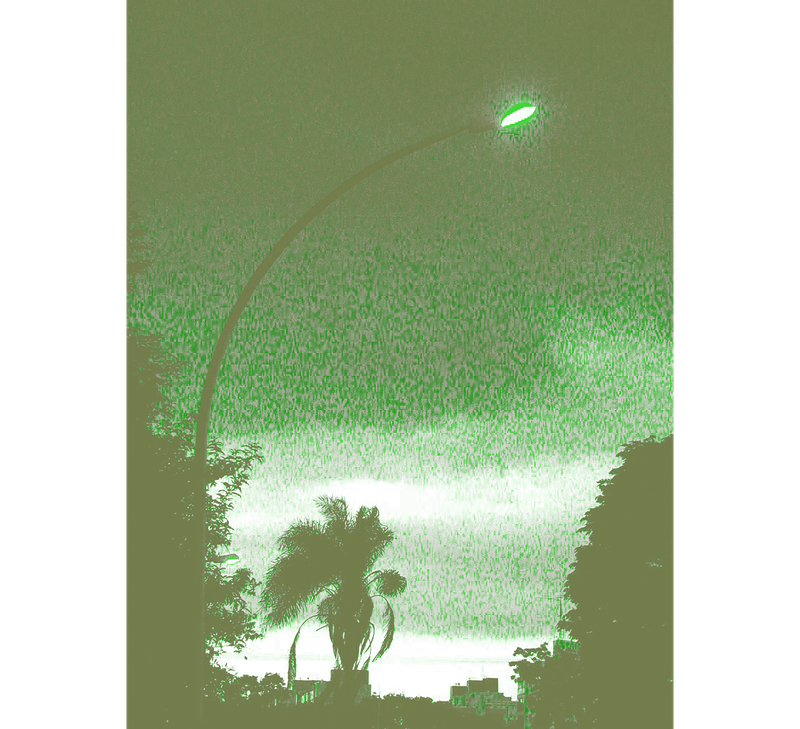
Photo CC-BY-SA by Daniel Pádua: ‘Storms of the past. Every now and then the sky threatens to fall, but a little bit of light is already enough to guide someone’3
The title of dpadua’s manifesto was ‘Remember the code’. Fifteen years after his departure, that call feels ever more necessary. We hear it in our dreams, when we meditate, when we whisper to ourselves about the state of the world and ponder how to survive the tidal changes around us.
That unfinished manifesto was never published. Versions have circulated among peers, perhaps a couple of mailing lists too. As the author never considered the manifesto quite finished, we will respect that and not share that version further. But we did read it. And we feel that its core is even more relevant nowadays. In times of greed and selfishness, it reminds us of the protagonism of collective power, the importance of affection and trust. It tells us to embrace life, acknowledging the pain and the delight of every chaotic and imperfect trace of each of us. The text you read now depicts our poetic memory of that other text.

Photo CC-BY-SA by Daniel Pádua: ‘Everything in the world is in motion. We exercise our senses to perceive as many details of the hustle and bustle as we can.’4
Code is all around
A lot is said about digital technologies. They are scary – and exciting. They change everything, and yet everything – at best – remains essentially the same. They liberate, and they further enslave. They expose power structures, while helping to maintain and reinforce such structures in smarter ways. Those ambiguities may as well be foundational to any human development. However, the quasi-theological dueling of hype and opposition, between integrated experts and apocalyptic ones, tends to drive discussions away from a crucial point.
Individuating technologies implies complex and largely unacknowledged choices. Such choices reflect technical, politico-ideological, economic, and cultural conditions of individuals, groups, and society at large. Even though it’s difficult to have a comprehensive enough overview, there are concrete decisions pointing to enclosure and restrictions, to segregation and control. And there are just as well other choices geared towards inclusion, flexibility, and long-term dependability.
‘Os especialistas não param de surgir’, Daniel wrote, and we read it again in 2025. Experts keep popping up. Life coaches convince people of the most bizarre and unimaginable practices to hack their living conditions. Shameless self-proclaimed ‘influencers’ share hollow nonsense seeking sheer attention and in result profits. Who would have imagined the internet becoming a gated community with large walls, built around each capitalized and proprietary social network? You can sell your iris-print in exchange for… nothing, really. Some justify destroying the planet with the excuse of colonizing Mars. They offer ready-made formulas, a monoculture of narratives, enabling the telessequestro de imaginários livres. The remote kidnapping of the free imaginaries.
Did you feed your custom-crafted algorithm today? Did you intentionally decide to sabotage it?
The key to discussing what it means to be tactical in present times lies in the title of that manifesto: ‘remember the code’, originally in English and quite ambiguous to translate easily to Portuguese. By then, it was likely written as a critique of the initiatives and policies that claimed to support open-source but never contributed with code, documentation, or any significant support whatsoever. It was a nuanced take on the idea of openness and how it was exercised, understood, and practiced. The truth is in code, he wrote. The truth is encoded, we add now, as we re-translate his words to English. A verdade está codificada. Mind the code. Don’t forget the code.
We are aware that the role of coding in this sense may sound a bit naive and somewhat obsolete. A bit of heroism, perhaps overrated for current times. We don’t ignore the pervasiveness of power structures, the seemingly inescapable conditions of capitalism realism. There is little that an individual can do about it. Especially the prototypical main character of cyberpunk stories—white, cisgender, of European origins, sometimes neurodivergent, hopefully socially and environmentally conscious even if by chance. To us, though, cyberpunk works best as scenario composition, not necessarily character description. And the core strength of its stories is not the mastering of technology, but its collective and critical appropriation: becoming able to socially adapt to changing conditions. We are interested in the supporting characters, human or not, who save the protagonist after hope disappears. For them – for us – coding is not computer programming. It is a way to interpret trends and shape responses collectively. Code as meta-code.
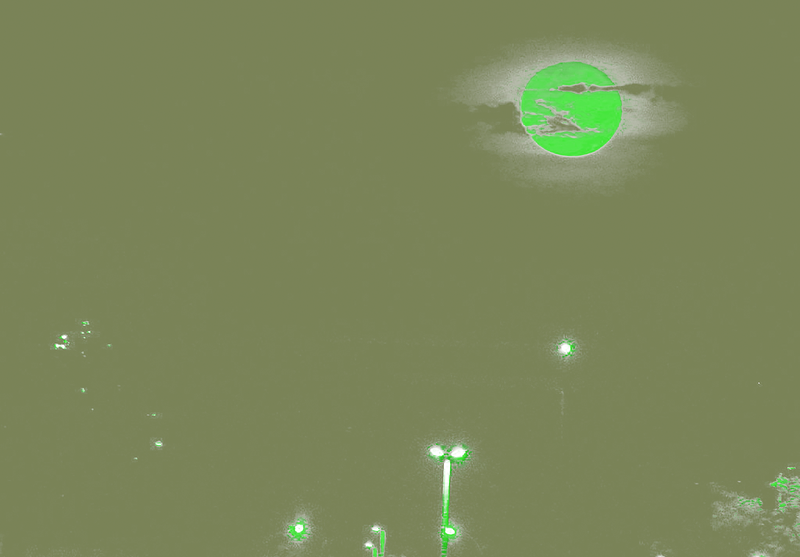
Photo CC-BY-SA by Daniel Pádua: ‘What’s the meaning of this? Look around and reflect.’5
Stories of defeat
A lot has happened during the fifteen years since Daniel scribbled those words. Assange, Snowden and Manning; Cambridge Analytica, hyper-targeting, Brexit and Trump; Me Too; Bolsonaro and the digital militias; Black Lives Matter; COVID; Musk, X, and again (or still) Trump. Crypto bubbles and NFTs. Sleeping Giants. Automated drone warfare. LLMs and transformer bots. Chip espionage. Tariff wars. Ongoing international scheming for rare earths and critical minerals. All that, and a lot more. Meanwhile, crucial reflection about – and engagement around – concrete openness has all but disappeared from public conversations about the present and future of technology. Over those years, we were defeated again and again, and yet decided – again and again – to keep re-telling our stories, so that at least our defeat does not mean anyone’s victory. To keep postponing the end of the world, as Ailton Krenak teaches us to.
Daniel also taught us something: that we can become the fantastic creatures we desire to be. Not the viral content, not the hype of influence, not the high standards of consumption. But a trickster-like situated remix of Clarke’s third law – ‘any sufficiently advanced technology is indistinguishable from magic’. We occasionally call our kind of technology TecnoMagia – if for nothing else at least to cover our tracks, as electric Curupiras with feet pointing backwards. The artifact is just a disguise, for our magic is different: caring for one another, connecting beyond screens and bits, challenging our perspective at all times, and thus changing reality. Indistinguishable, indeed.
For all those reasons, we need to remember the code: the collective seed-bags allowing us to re-tell stories, to renew hope, and to regenerate futures. And this here text is a call to us all: remember to remember the code.
-
(1) As of mid-2025, Daniel Pádua’s entry on the Portuguese-language Wikipedia is classified as spammy or non-neutral. For this reason, the following link may have been removed in the future: https://pt.wikipedia.org/wiki/Daniel_P%C3%A1dua. The internet archive has copies of it. ↩
-
(2) Zumbi dos Palmares was a Brazilian quilombola from the 1600s, leading the resistance of enslaved people against European colonial power. The supposed day of his death and final defeat is celebrated as Black Awareness Day in Brazil. ↩
-
(3) Source: https://www.flickr.com/photos/imaginarios/2089424536/in/photostream ↩
-
(4) Source: https://www.flickr.com/photos/imaginarios/2200708194/in/photostream ↩
-
(5) Source: https://www.flickr.com/photos/imaginarios/2063954035/in/photostream ↩